A blonde spider
The female's body is covered in pale, straw-coloured hair. Males are darker and leggier.
The desert · Spiders and scorpions
Aphonopelma chalcodes
A large, hairy spider. The female is pale sandy-blonde, with a darker abdomen and legs.
Plods after you, one foot at a time. Move your pointer and see.
Good to know
The female's body is covered in pale, straw-coloured hair. Males are darker and leggier.
After the summer rains, males leave their burrows and walk for miles looking for females. They are often seen crossing roads.
It takes about ten years to become an adult. Females can then live for another fifteen or twenty.
She covers the mouth of her burrow with a veil of silk by day.
If bothered she kicks barbed hairs off her abdomen. They itch and sting.
She is slow and unwilling to bite, and her venom is about as strong as a bee's.
The real thing
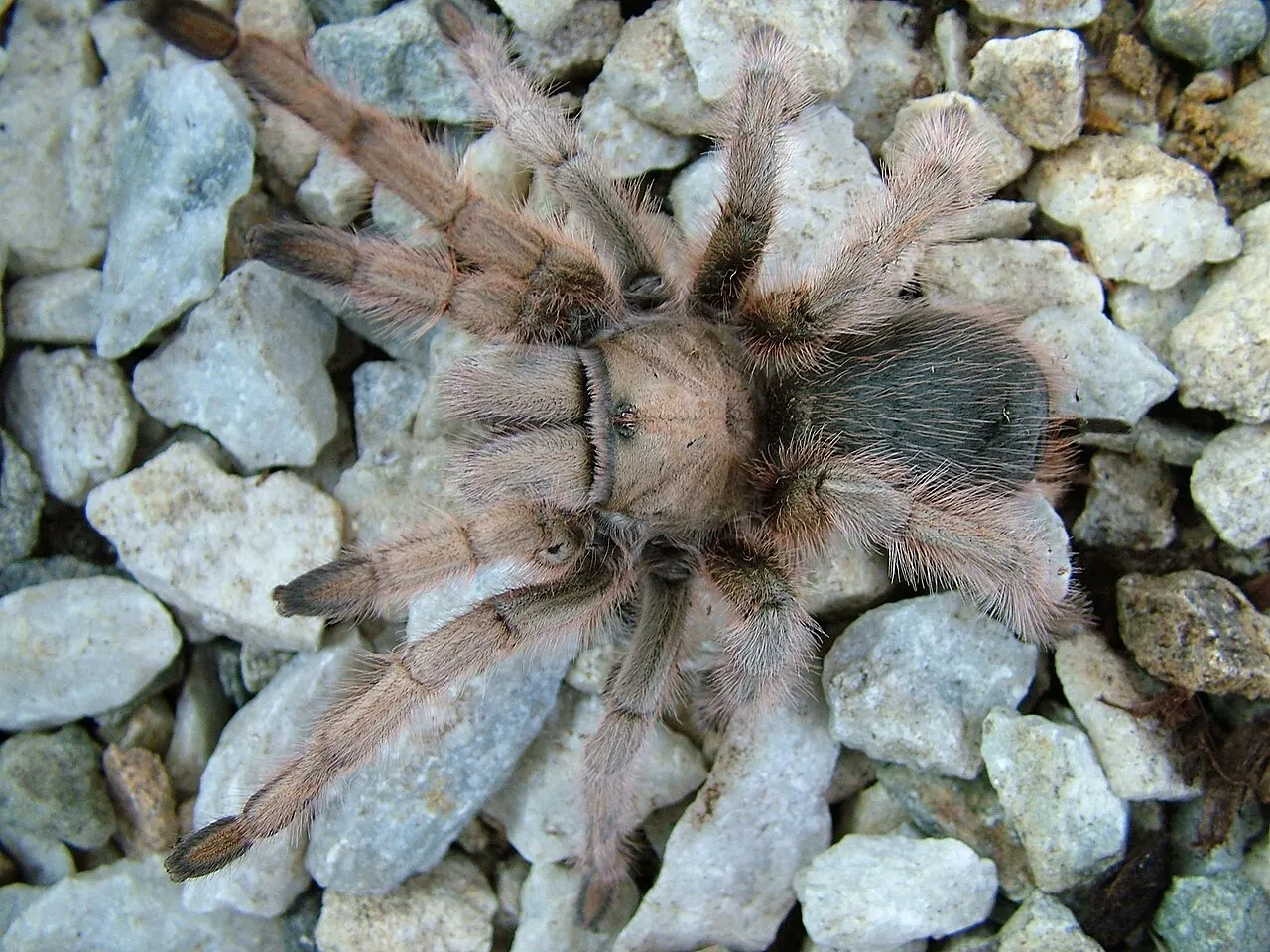
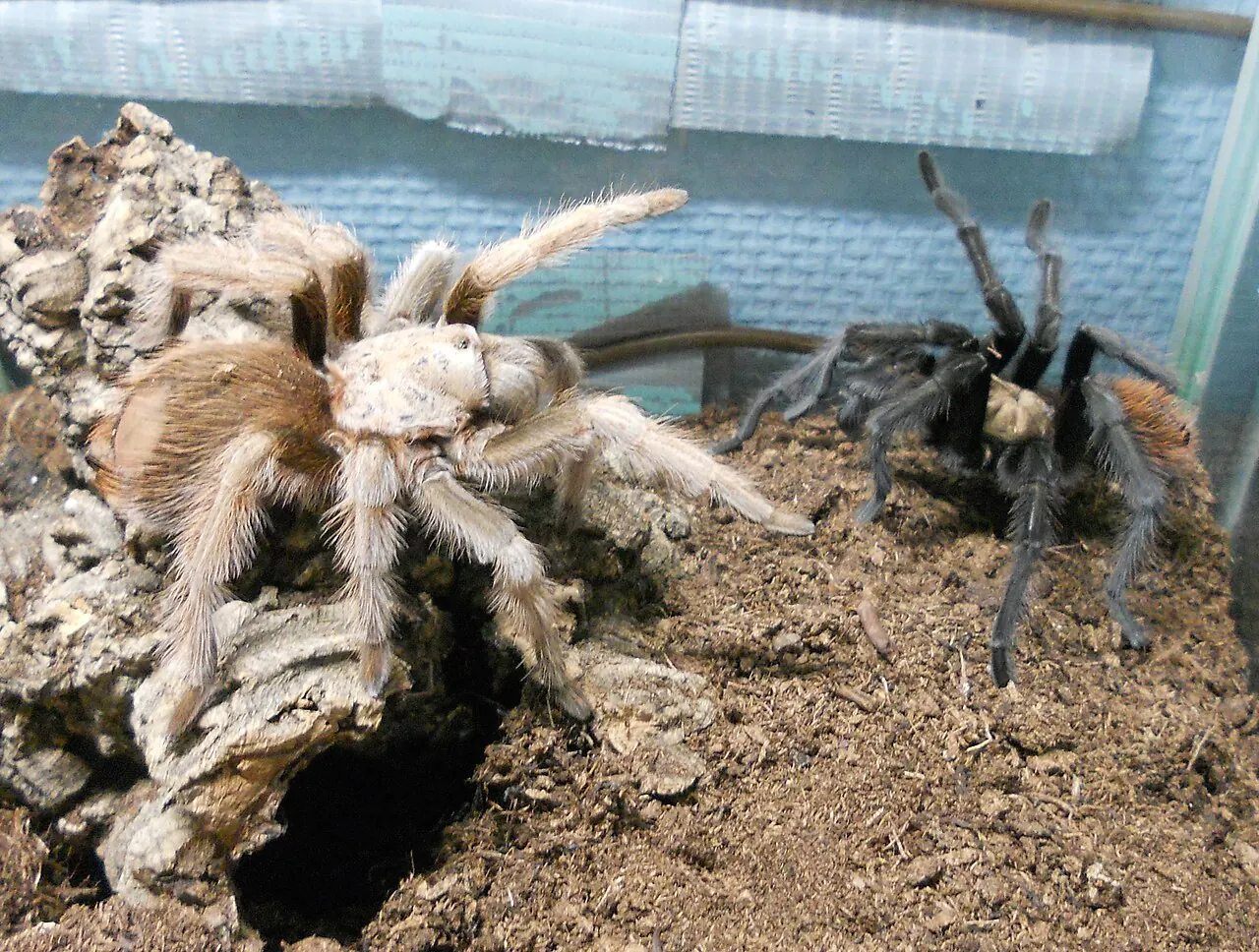
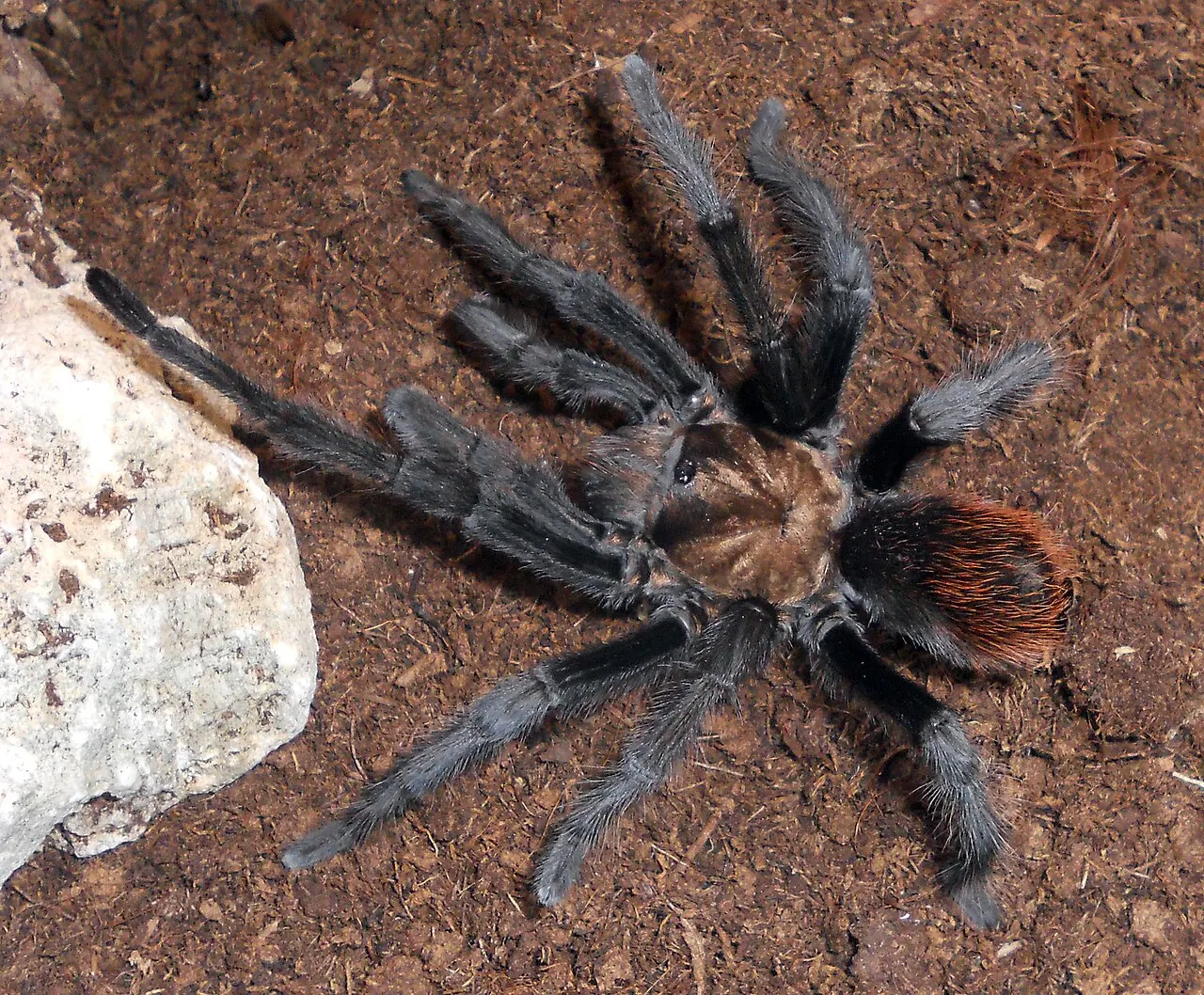
Photos are from Wikimedia Commons, used under the free licences shown. They have been resized, and cropped where they appear in link previews.
Drive or walk slowly along a desert track at dusk in late summer. A walking male shows up well against the pale ground. Take an adult with you.
If you find one on a road, it is safe to steer it across with a stick. Most of those seen walking are males near the end of their lives.
Bugs from other parts of the world live on their own pages: choose another.


