It hunts tarantulas
The female stings a tarantula to paralyse it, drags it to a burrow and lays one egg on it. The grub eats the spider alive.
The desert · Bees, wasps and ants
Pepsis
A large wasp with a blue-black body, bright orange wings and curled antennae.
Runs after you, flicking its wings. Move your pointer and see.
Good to know
The female stings a tarantula to paralyse it, drags it to a burrow and lays one egg on it. The grub eats the spider alive.
Its sting is rated among the most painful of any insect. The advice from the man who measured it is to lie down and scream.
The pain is fierce but lasts only about three minutes, and does no lasting harm.
It ignores people unless it is grabbed. Hardly anything dares to eat it.
Adult wasps feed at flowers, especially milkweed, and sometimes get drunk on fermented fruit.
It was chosen as the state insect of New Mexico after a class of schoolchildren proposed it.
The real thing
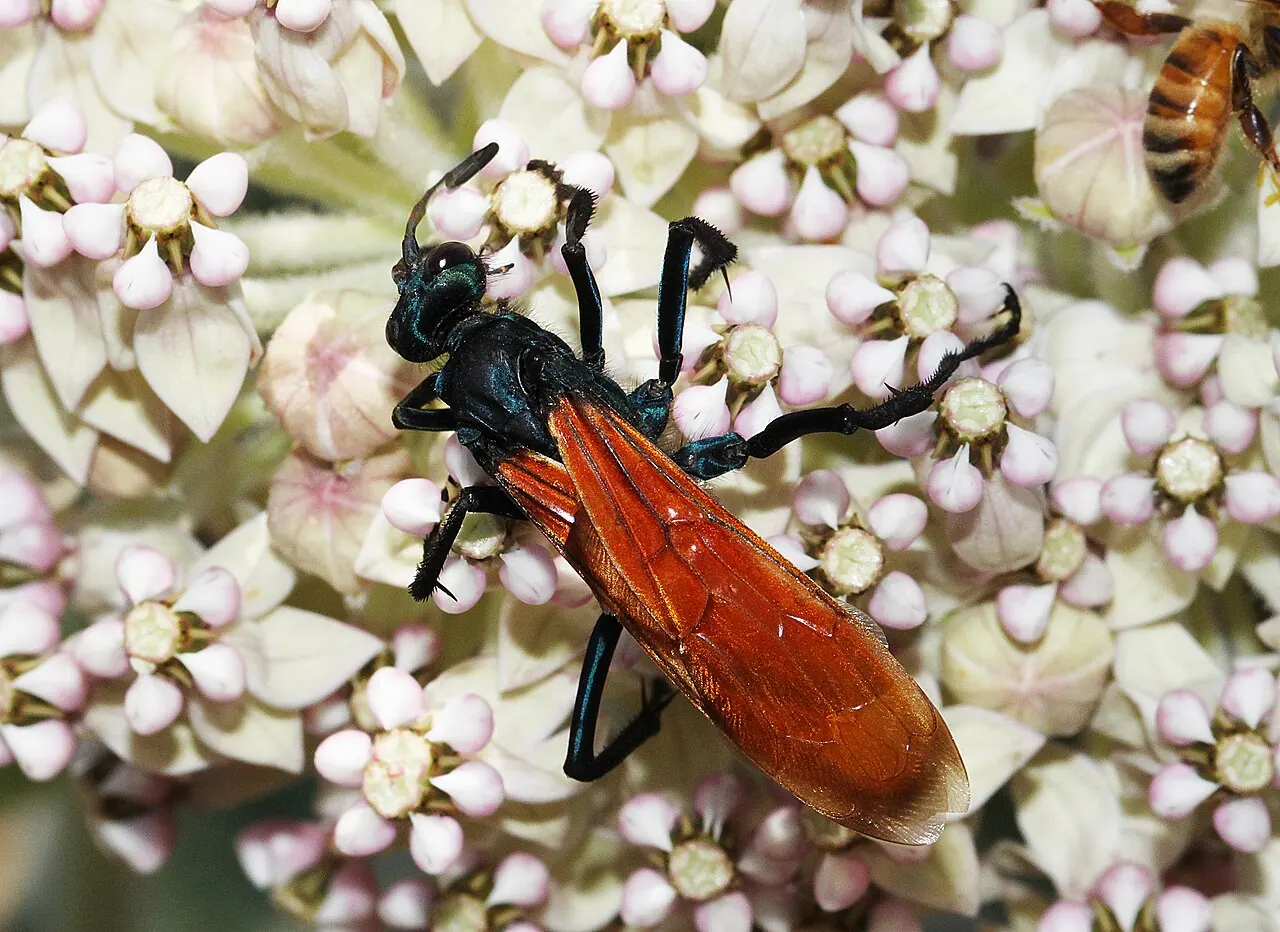
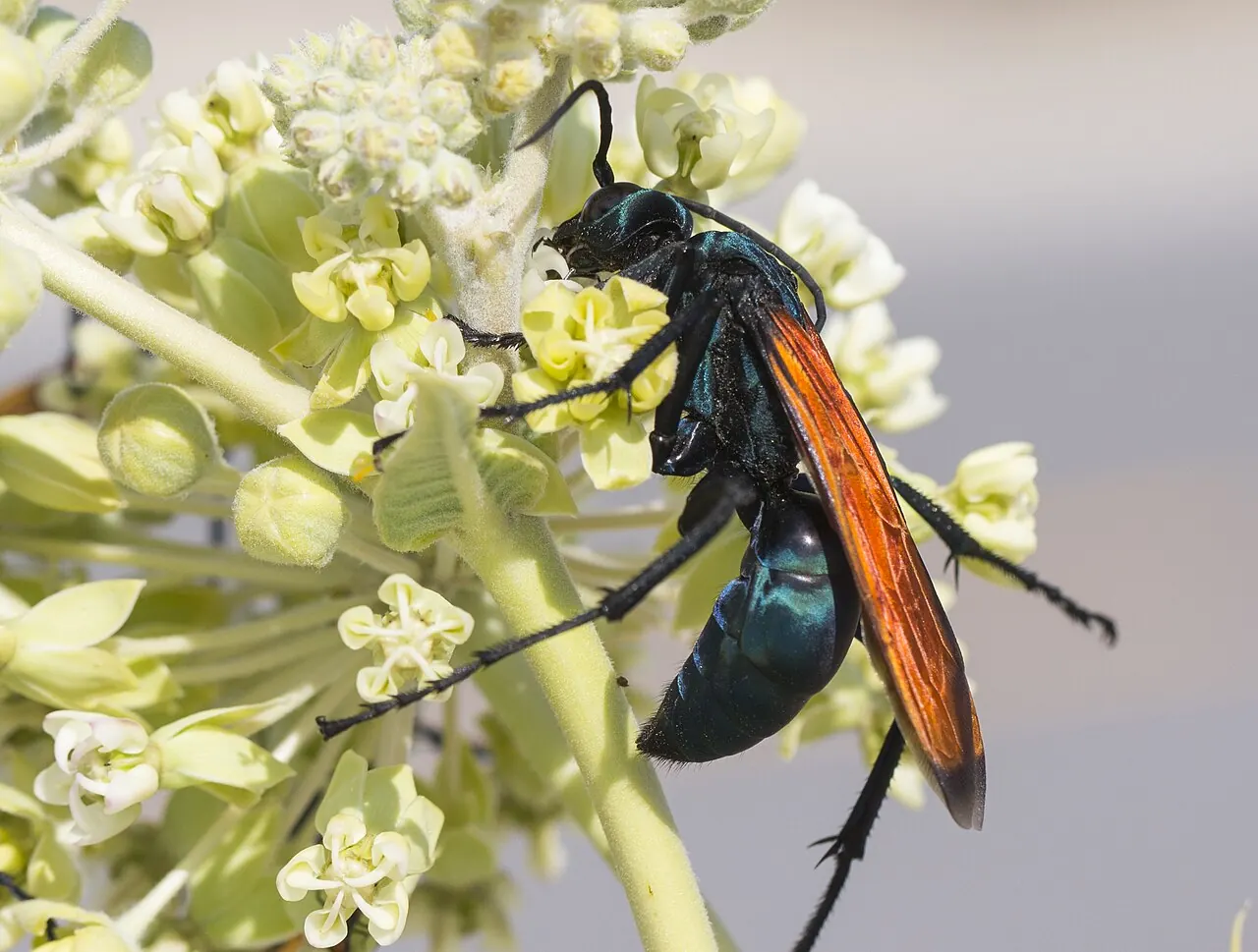
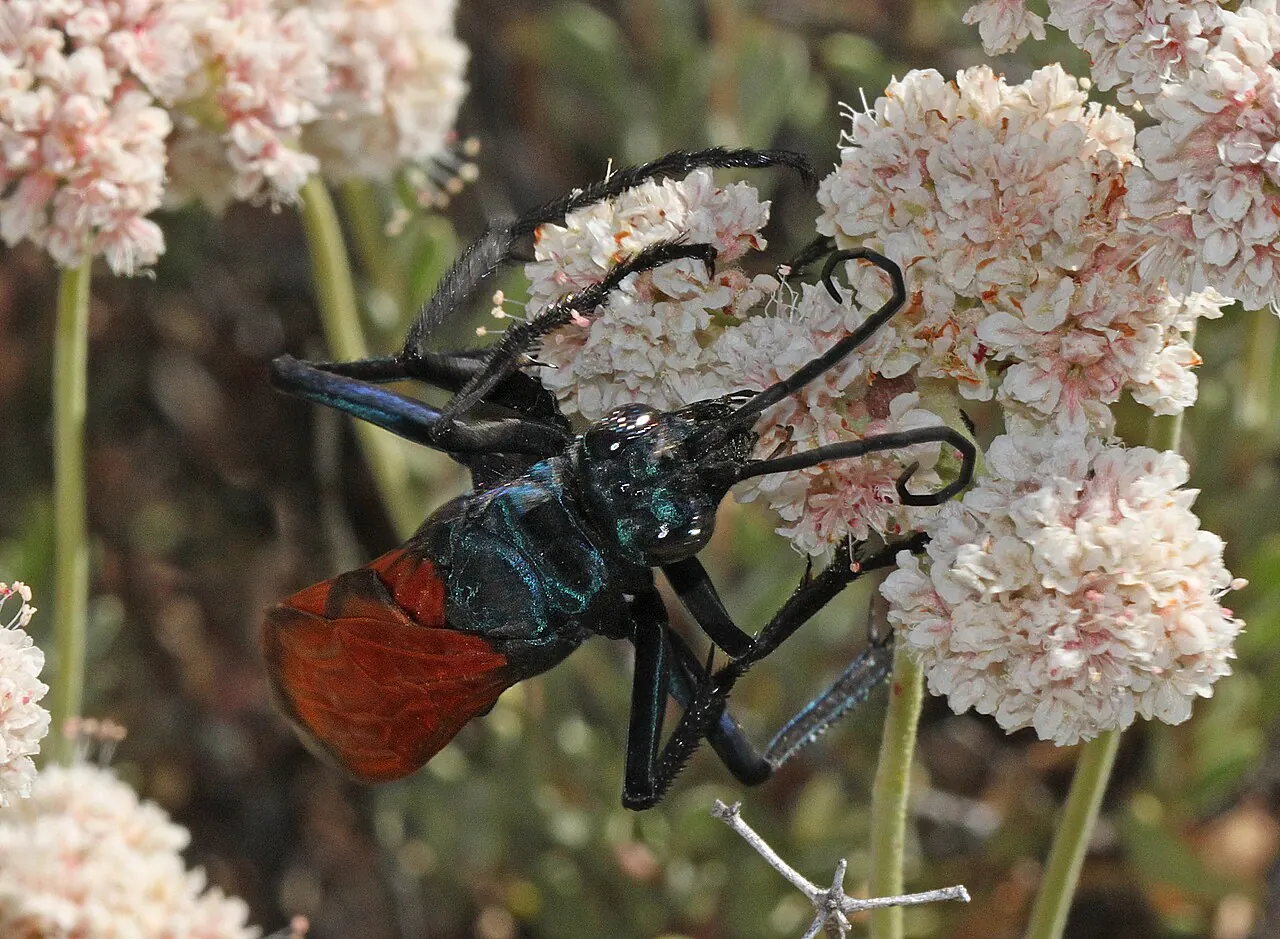
Photos are from Wikimedia Commons, used under the free licences shown. They have been resized, and cropped where they appear in link previews.
Look on milkweed and mesquite flowers on summer days. The orange wings and jerky walk are easy to recognise.
Watch it and leave it be. The orange wings are a warning, and it means it.
Keep going
Bugs from other parts of the world live on their own pages: choose another.
_(6-30-10)_slo_co,_ca_-03_(4750794796).jpg)
_feeding_on_milkweed_flowers_(30324501491).jpg)
_(6-30-10)_slo_co,_ca_-01_(4750771480).jpg)