Horns for wrestling
Males use their horns to lever each other off a branch. The loser is thrown, unharmed.
Tropical north · Beetles
Xylotrupes ulysses
A big, glossy black beetle. The male has a forked horn on his head and another on his back.
Trundles after you like a small tank. Move your pointer and see.
Good to know
Males use their horns to lever each other off a branch. The loser is thrown, unharmed.
A rhinoceros beetle can shift many times its own weight.
When picked up it squeaks and hisses by rubbing its body against its wing cases. It is bluff: it cannot bite or sting.
The larva is a C-shaped white grub as big as a thumb, living in rotting wood and compost.
In the wet season, dozens gather on poinciana trees and under street lamps.
The female is smaller and plain, with no horns at all.
The real thing
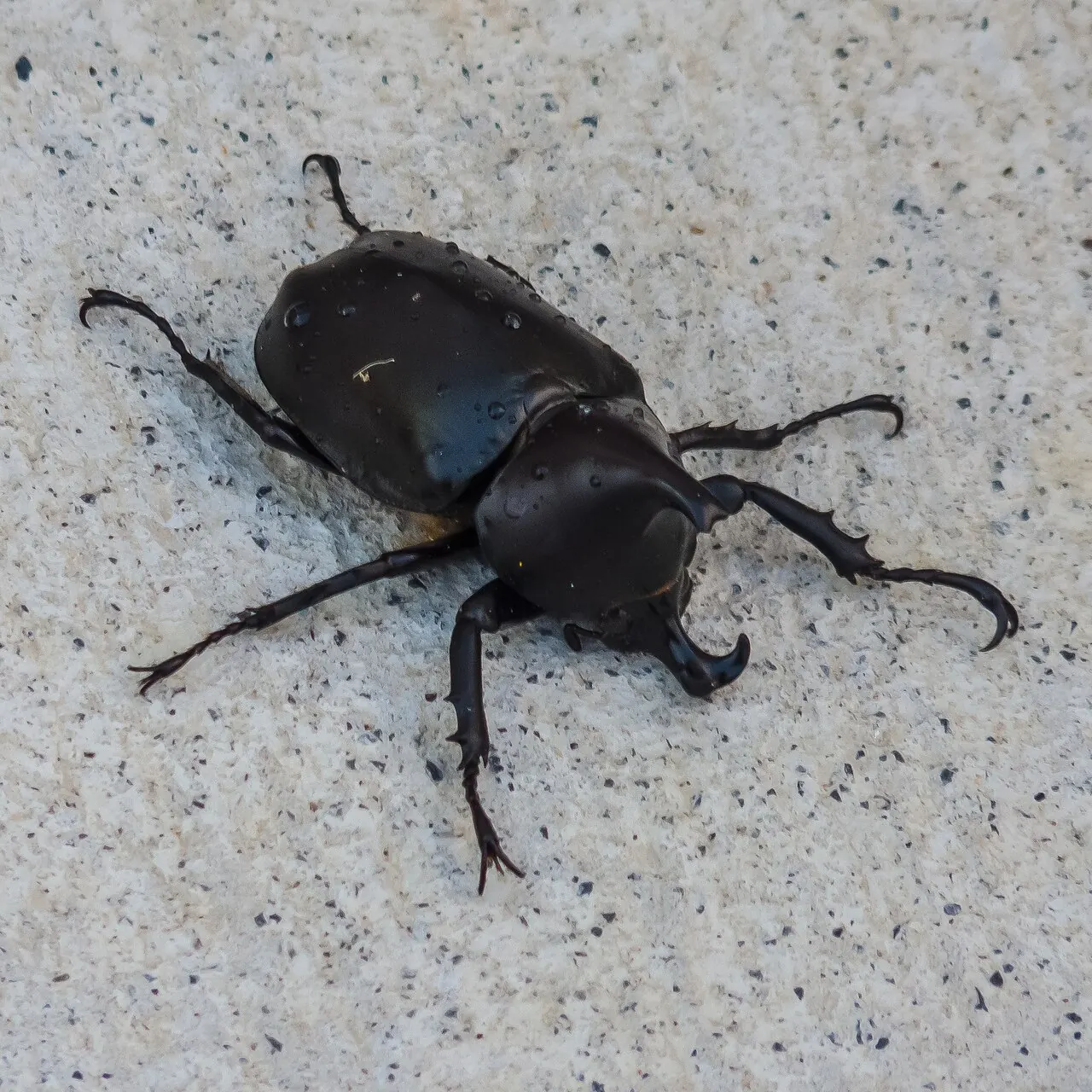
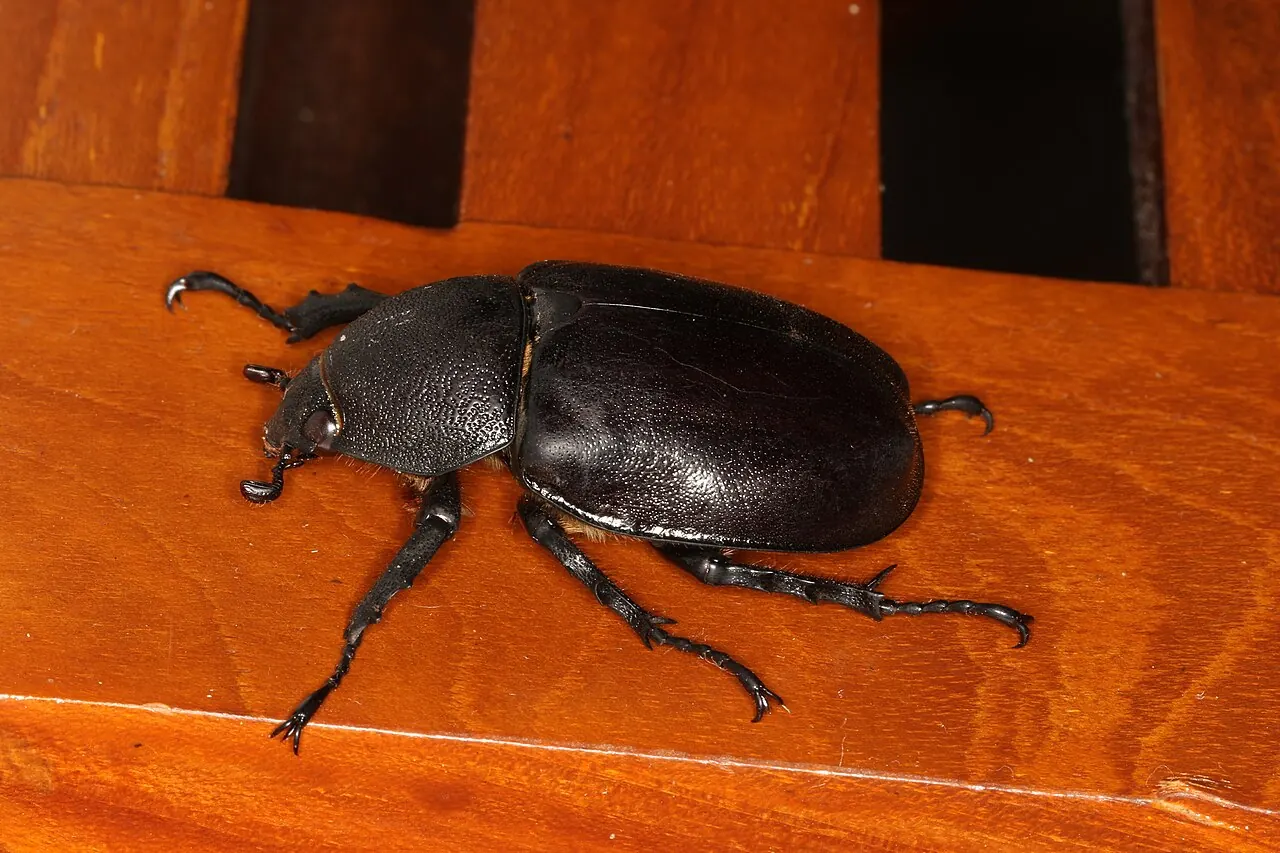
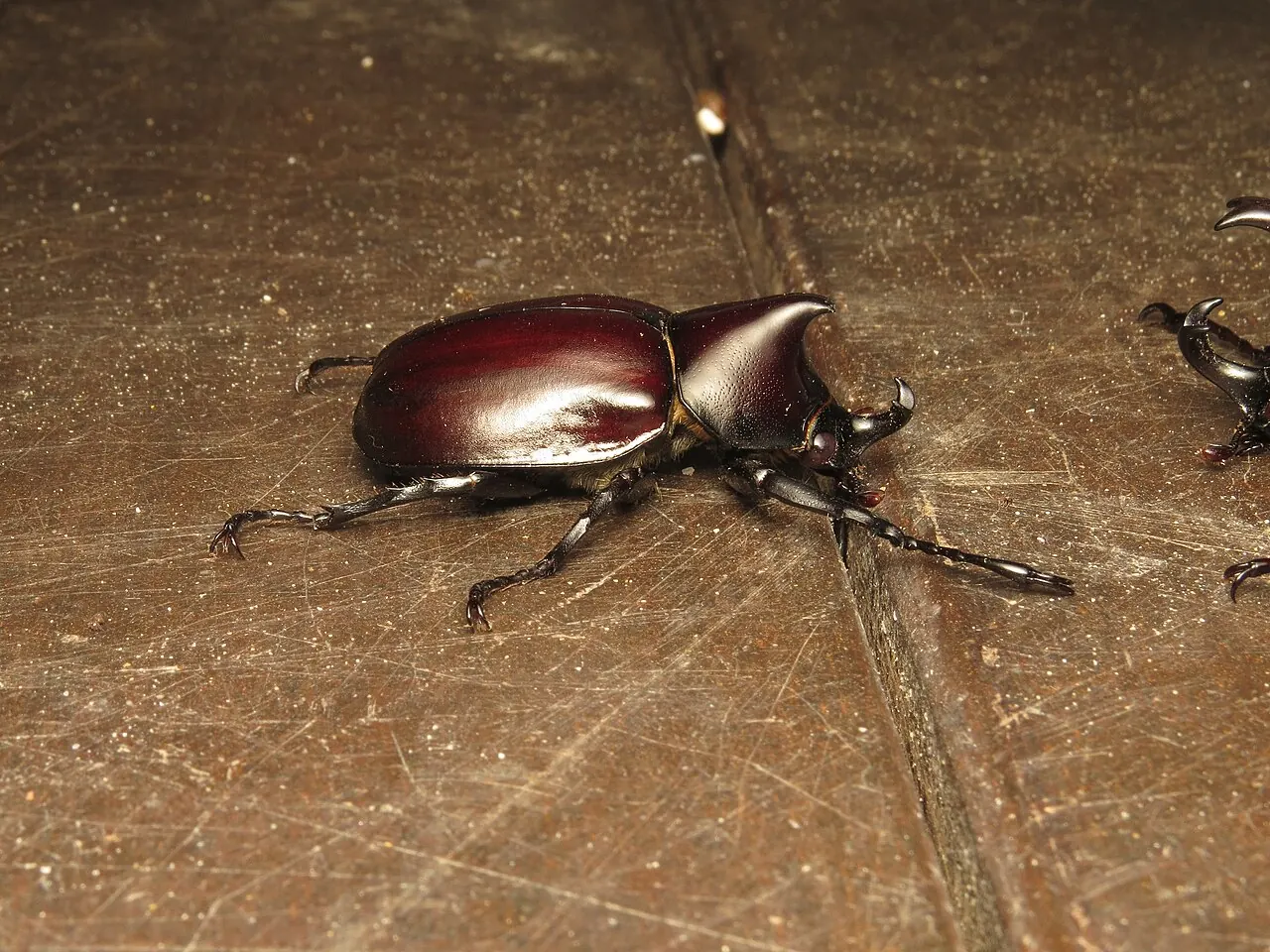
Photos are from Wikimedia Commons, used under the free licences shown. They have been resized, and cropped where they appear in link previews.
In Cairns or Townsville on a summer evening, look on the trunks of poinciana trees and on the ground under lights.
The grubs turn dead wood and mulch into soil. A rotting log or a compost heap is where the next ones grow up.
Keep going
Bugs from other parts of the world live on their own pages: choose another.

.jpg)
.jpg)