Count the bands
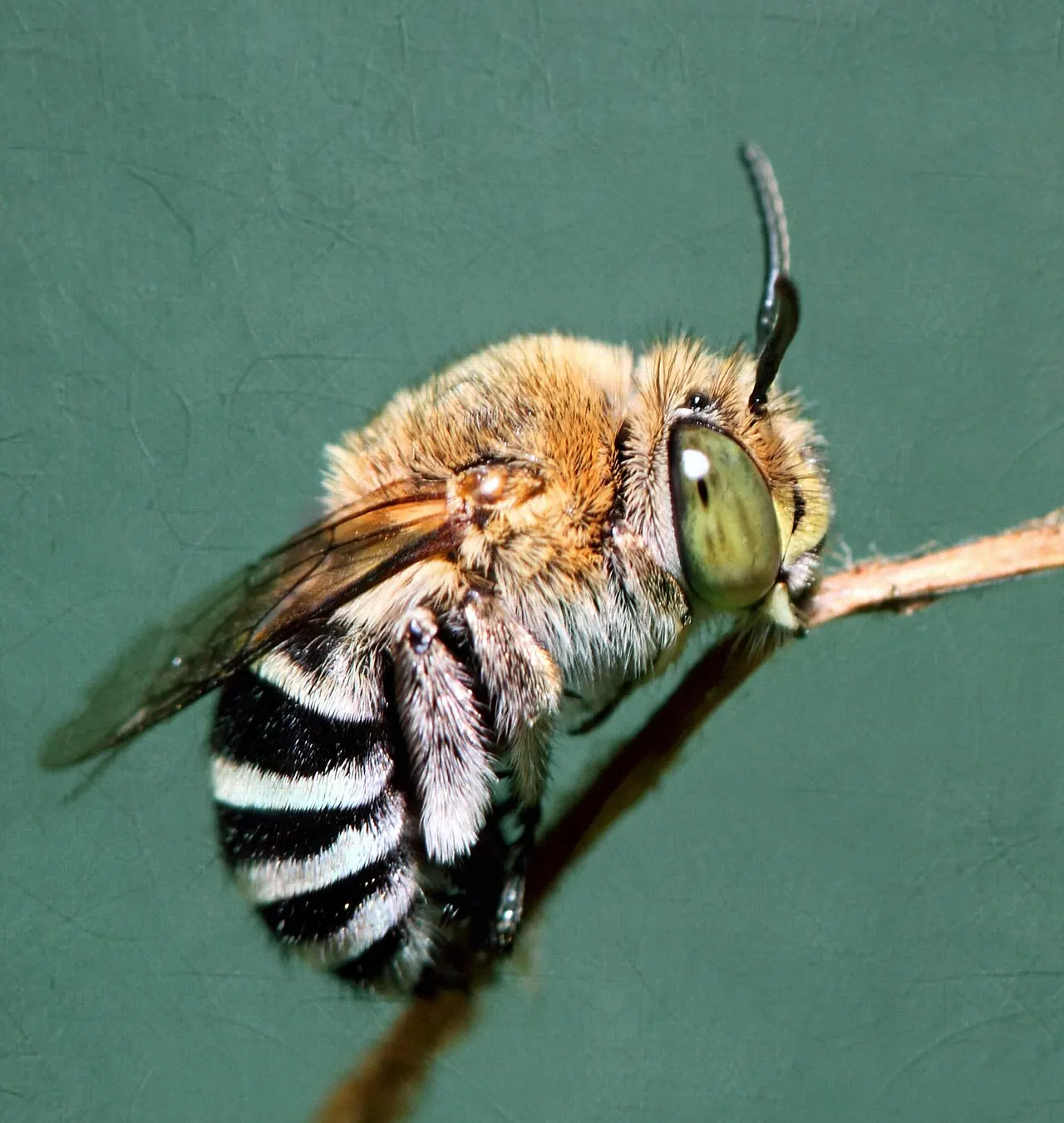
Males have five blue bands and females have four.
Tropical north · Bees, wasps and ants
Amegilla cingulata
A stout bee with a golden-brown furry chest and a black abdomen ringed with bands of pale, shining blue.
Zips after you and hovers. Move your pointer and see.
Good to know
Males have five blue bands and females have four.
It grips a flower and shakes it by banging its head hundreds of times a second, which makes the pollen pour out.
Tomato flowers only release their pollen when shaken. Growers in Australia are trying this bee in greenhouses.
There is no hive and no honey. Each female digs her own burrow in soft earth, clay or old mortar.
Males spend the night clamped to a grass stem by their jaws, legs tucked up, often several in a row.
It flies in quick dashes between flowers and hovers in front of each one.
The real thing
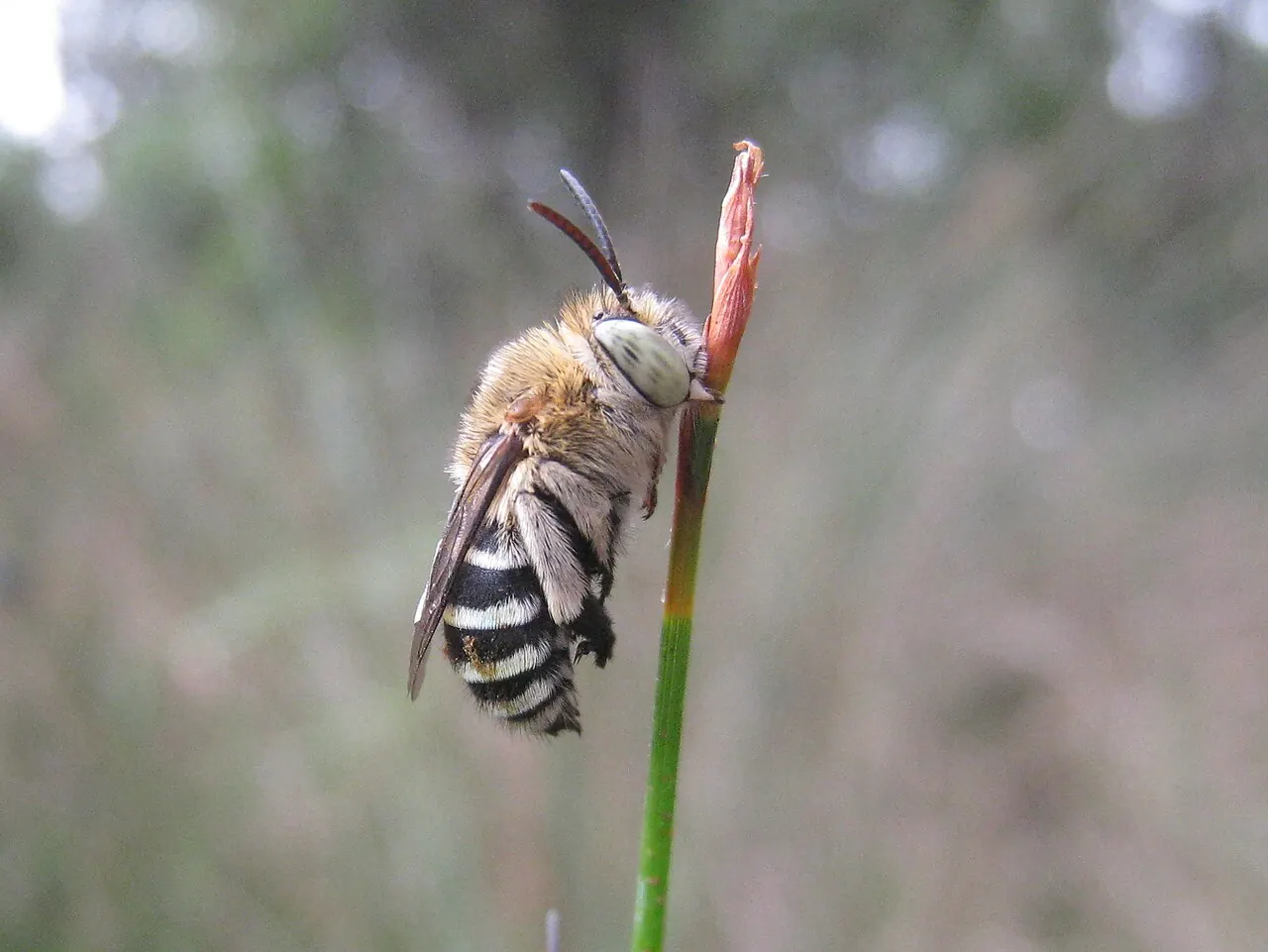
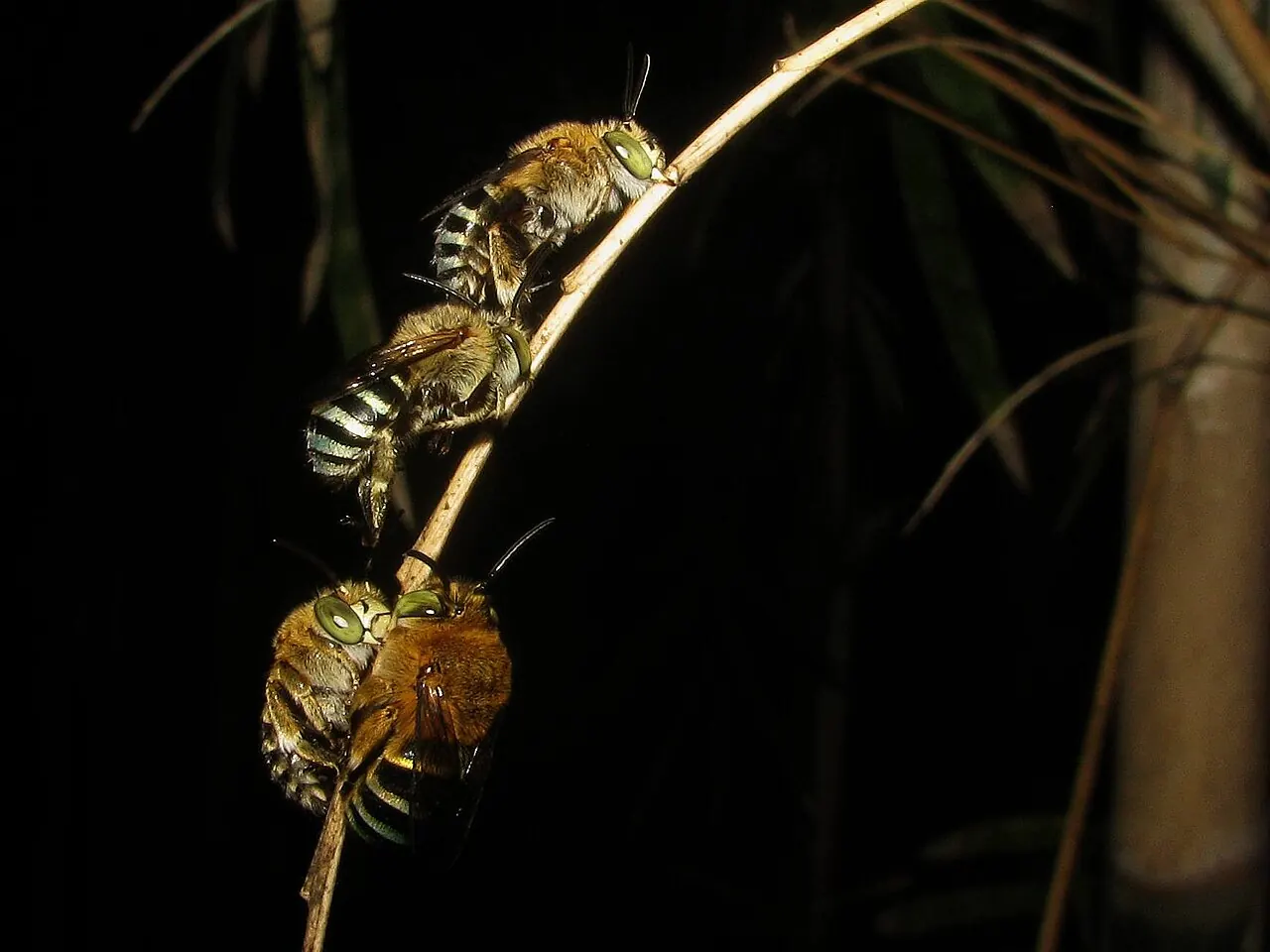
Photos are from Wikimedia Commons, used under the free licences shown. They have been resized, and cropped where they appear in link previews.
Watch blue and purple flowers, such as lavender and salvia, on a warm day. Listen for a short, loud buzz as it lands.
Leave a patch of bare earth or a bank of clay in the garden. Mud-brick bee blocks are easy to make and females move in.
Bugs from other parts of the world live on their own pages: choose another.
.jpg)

