Skip to the content
A to Z › The garden › Honeybee
The garden · Bees, wasps and ants
Western honeybee
Apis mellifera
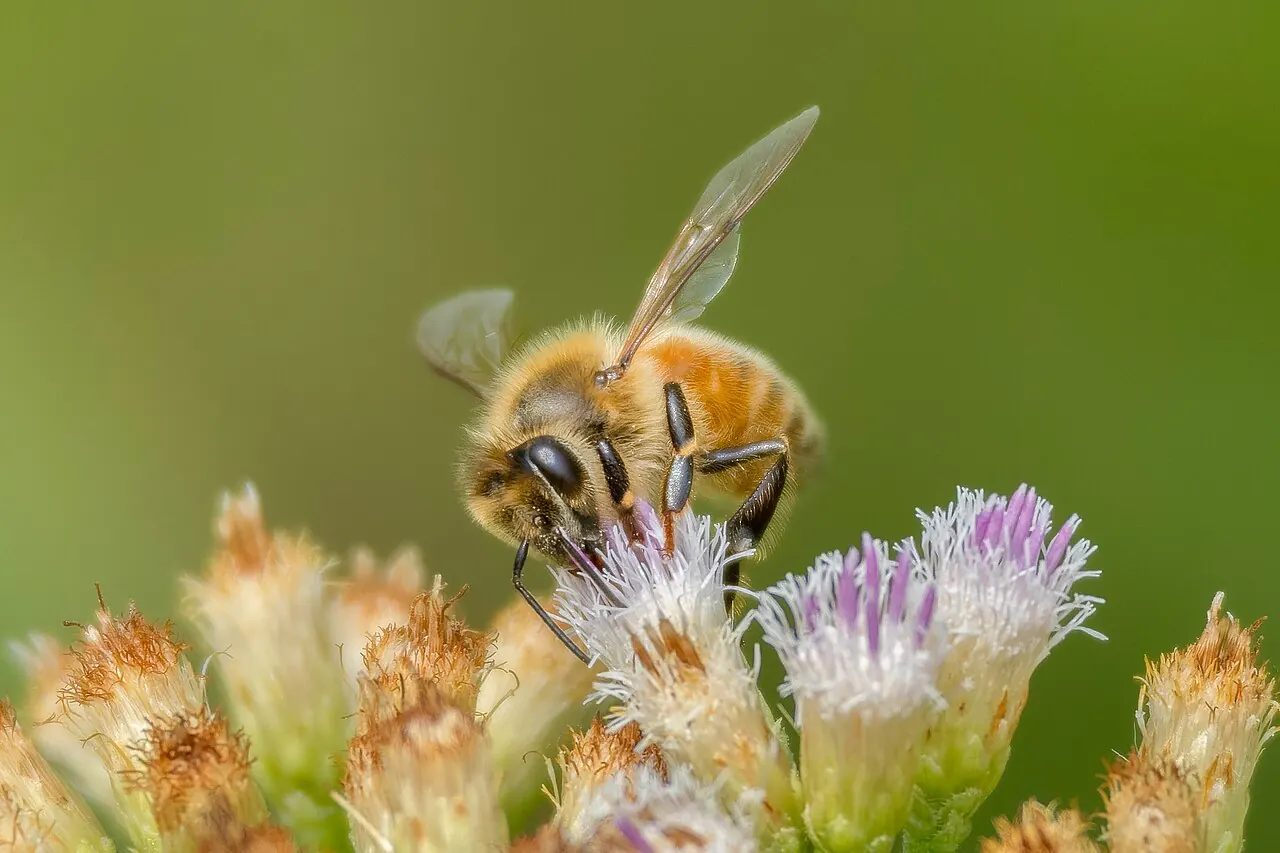
A slim, amber-and-brown striped bee, much less furry than a bumblebee, that lives in colonies of thousands.
Size Workers about 12mm long
Look for it March to October
Where Anywhere with flowers, usually within a few miles of a hive
I've seen one: add to my list My spotter's list
Flies after you, then waggles when it stops. Move your pointer and see.
Good to know
Six things about the honeybee
Dance The waggle dance A worker tells the others where flowers are by dancing. The angle gives the direction and the length gives the distance.
Honey A lifetime for a teaspoon One worker makes about a twelfth of a teaspoon of honey in her whole life.
Numbers A crowded home A hive in summer may hold fifty thousand bees, almost all of them sisters.
Queen One mother The queen can lay well over a thousand eggs a day in early summer.
Winter A huddle through winter Honeybees do not sleep through winter. They cluster round the queen and shiver to keep warm, eating their stored honey.
Sting A sting that costs her A honeybee's sting is barbed. When she stings a person it tears away, and she dies.
The real thing
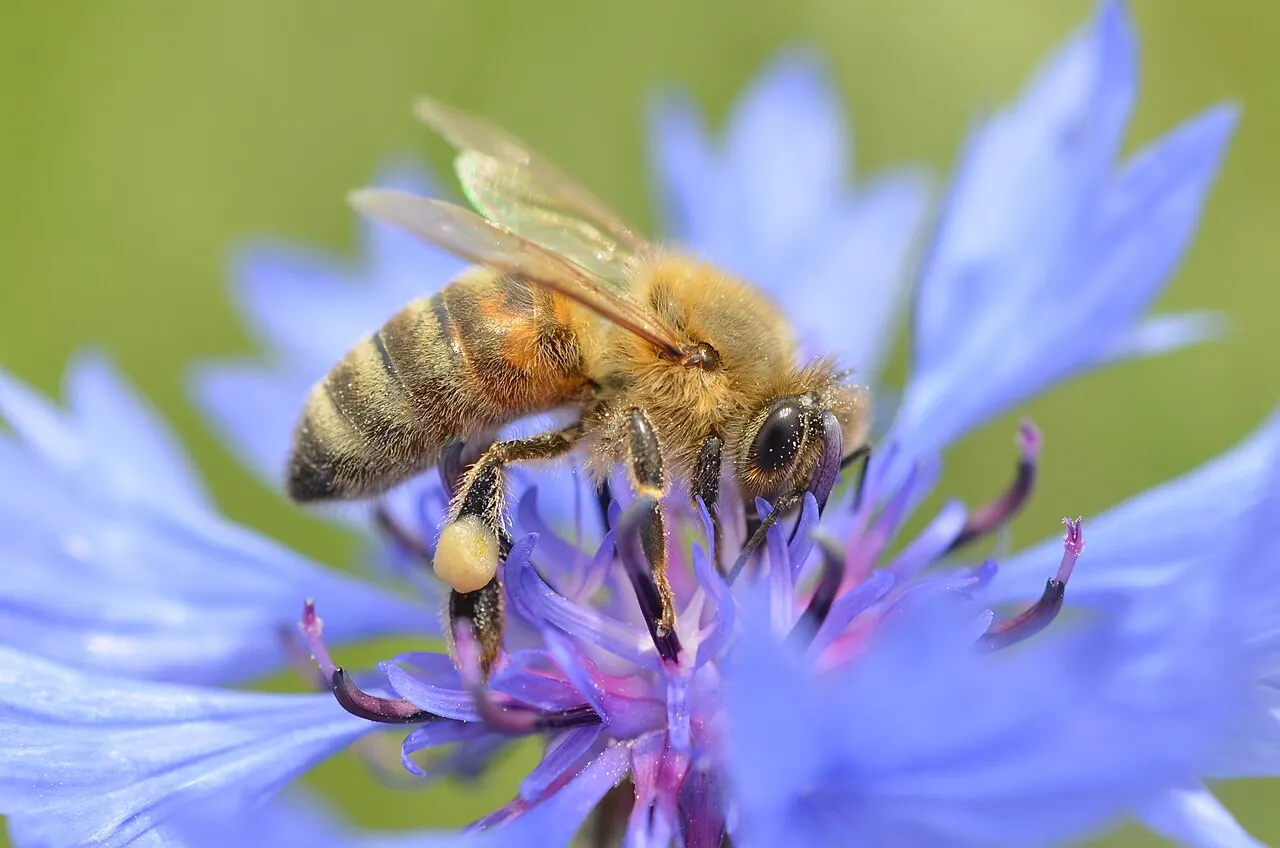
Photos of the honeybee
Photos are from Wikimedia Commons, used under the free licences shown. They have been resized, and cropped where they appear in link previews.
‹
›
×
Out and about How to spot one Watch a patch of clover or a flowering ivy in autumn. Honeybees are slimmer and browner than bumblebees and often carry yellow lumps of pollen on their back legs.
Lend a hand How to help Buy honey from a local beekeeper if you can, and grow flowers with open, single blooms that bees can get into.
Following you Ladybird Change bug
Who should follow you? ×
Garden Meadow Pond Log pile After dark
The garden
Ladybird Walks after you, and flies when you get well ahead Bumblebee Buzzes along behind you and hovers when you stop Red-tailed bee Hums after you, bobbing as it goes Honeybee Flies after you, then waggles when it stops Hoverfly Darts after you and hangs dead still in the air Ants March after you in a line Snail Glides after you, leaving a trail Garden spider Lowers itself on a thread of silk
Meadow and hedgerow
Peacock Flutters after you and basks with its wings open Red admiral Glides after you in strong, fast swoops Brimstone Flies after you without stopping for long Orange-tip Flutters after you along the hedge Meadow brown Bobs after you, low over the grass Hummingbird hawk-moth Hovers after you, tongue out Grasshopper Hops after you in long jumps Bush-cricket Hops after you, antennae waving
Pond and stream bugs live on their own page: choosing one takes you there.
Pond and stream
Dragonfly Hunts back and forth after you, hovering to look Damselfly Flutters after you like a butterfly Pond skater Skates after you in quick strokes Whirligig beetles Whirl after you in a spinning group Diving beetle Swims after you, diving and bobbing up Mayflies Dance after you, up and down over the water
The log pile
Stag beetle Walks after you, and takes off with a whirr Ground beetle Sprints after you in bursts Woodlouse Trundles after you, and rolls up if you rush it Centipede Races after you on fifteen pairs of legs Millipede Flows after you on a wave of legs Earthworm Wriggles after you, stretching and shrinking
After dark
Glow-worm Crawls after you, leaving a glowing trail Moths Circle your lamp, bumping into the light Elephant hawk-moth Circles your lamp at dusk Leopard slug Glides after you, slowly, on a ribbon of slime
Bugs from other parts of the world live on their own pages: choose another .