Skip to the content
The garden · Bees, wasps and ants
Buff-tailed bumblebee
Bombus terrestris
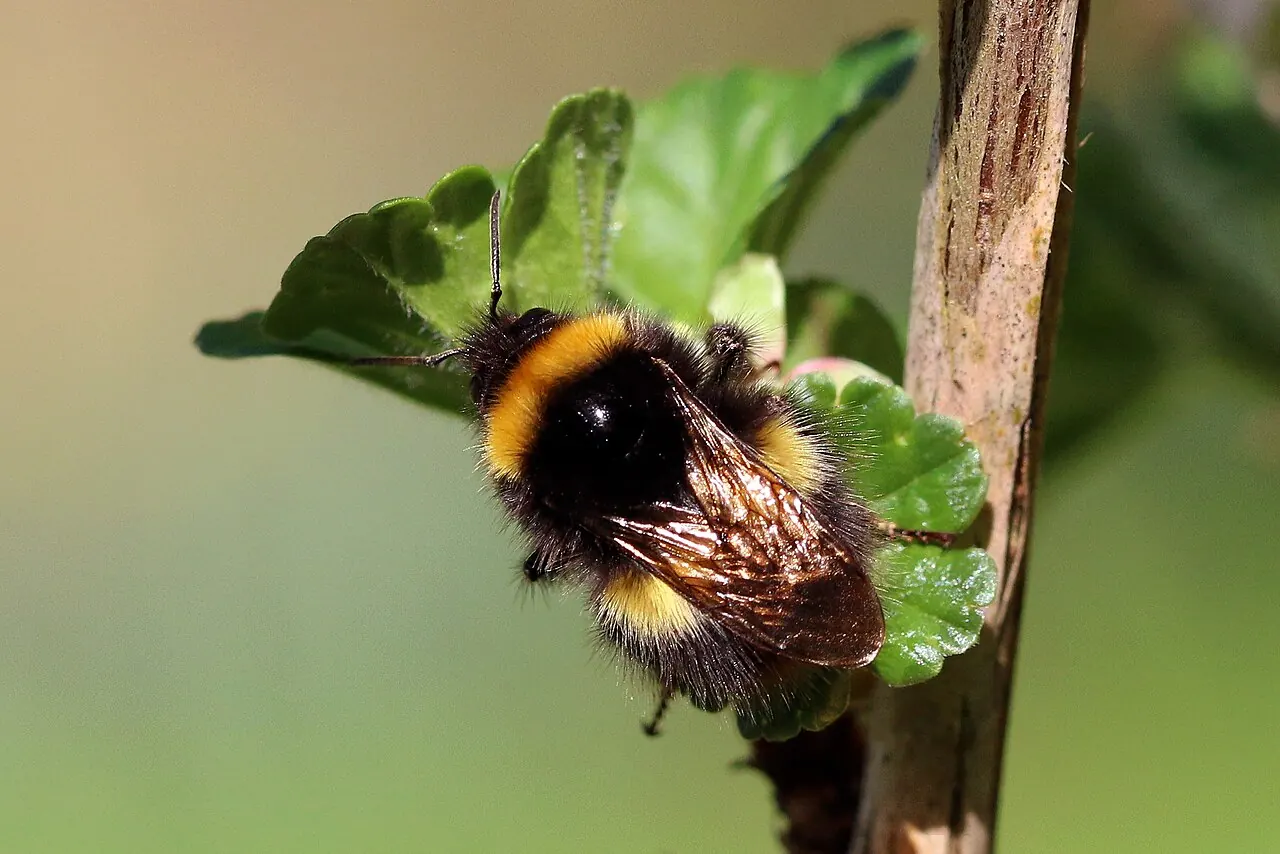
A big, furry bee with two dull-yellow bands. The queen's tail is buff and the workers' tails are nearly white.
- Size
- Queens up to 2cm, workers smaller
- Look for it
- February to October
- Where
- Gardens, parks and farmland across Britain
My spotter's list
Buzzes along behind you and hovers when you stop. Move your pointer and see.
Good to know
Six things about the bumblebee
BuzzIt shakes pollen loose
A bumblebee grips a flower and buzzes at just the right pitch to make the pollen fall out. Tomatoes need this.
QueenThe queen starts alone
Only the queen lives through winter. In spring she finds a hole, often an old mouse nest, and raises the first workers herself.
WarmIt shivers to warm up
By shivering its flight muscles, a bumblebee can fly on days too cold for most insects.
SmellSmelly footprints
Bumblebees leave a scent on each flower they visit, so the next bee knows it has just been emptied.
RobberA nectar thief
If a flower is too deep for its tongue, the buff-tail bites a hole in the side and drinks through that.
StingSlow to anger
A bumblebee can sting, but it very rarely does unless its nest is disturbed.
The real thing
Photos of the bumblebee
Photos are from Wikimedia Commons, used under the free licences shown. They have been resized, and cropped where they appear in link previews.
![]()
Out and aboutHow to spot one
Listen for a deep hum round crocuses in early spring: that will be a queen. In summer, lavender and foxgloves are covered in workers.
Lend a handHow to help
Early flowers matter most. Crocus, pussy willow and lungwort feed queens when little else is out.
Following youLadybird
Who should follow you?
The garden
Meadow and hedgerow
Pond and stream bugs live on their own page: choosing one takes you there.
Pond and stream
The log pile
After dark
Bugs from other parts of the world live on their own pages: choose another.



_2.jpg)
_male_Cumnor.jpg)