Skip to the content
Meadow
Field vole
Microtus agrestis
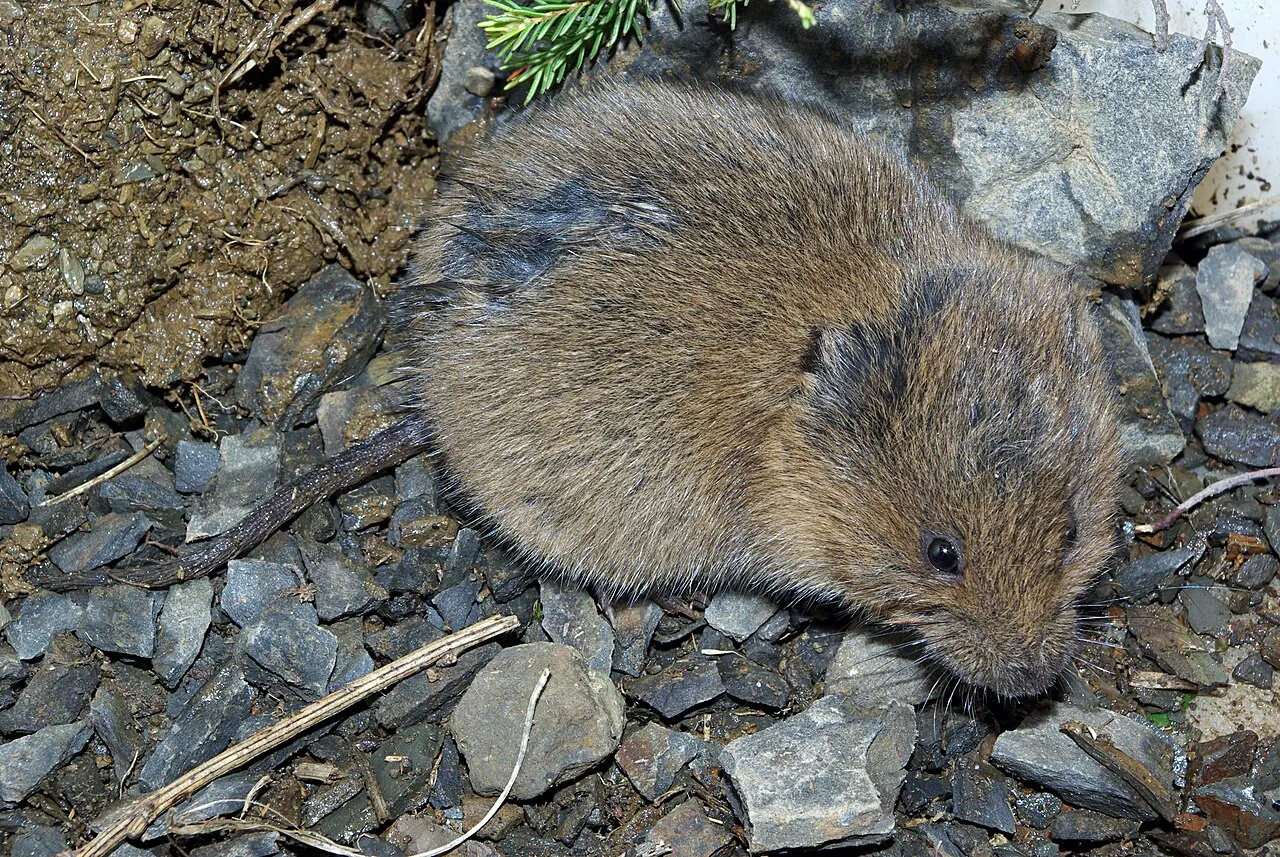
A small, chubby, grey-brown rodent with a blunt nose, tiny ears and a short tail.
- Size
- About 10cm long, with a short tail
- Look for it
- All year round
- Where
- Rough, tussocky grassland and meadow edges
My spotter's list
Scurries after you in short dashes through the grass. Move your pointer and see.
Good to know
Six things about the field vole
NumbersBritain's commonest mammal
There are thought to be tens of millions of field voles in Britain, though you will rarely see one.
TunnelsRunways in the grass
Field voles make a network of little tunnels through the bottom of long grass, with nests of shredded grass.
FoodA grass eater
They eat grass stems, leaves and roots, and leave little piles of chopped stems in their runways.
OwlsOwl food
Field voles are the main food of barn owls and kestrels. In a good vole year, the owls raise more chicks.
TellVole or mouse?
A vole has a blunt nose, small ears half hidden in fur and a short tail. A mouse has a pointed nose, big ears and a long tail.
LifeA short, busy life
A field vole can have several litters in a summer, but most live for less than a year.
The real thing
Photos of the field vole
Out and aboutHow to spot one
You are more likely to see its signs than the animal. Part the base of long, rough grass and look for narrow runways with chopped stems in them.
Lend a handHow to help
Leave a patch of grass to grow long and tussocky all year. It shelters the voles, and the voles feed the owls and kestrels.
Following youLadybird
Who should follow you?
Bees and hoverflies
Butterflies and moths
Dragonflies and damselflies
Beetles, hoppers and ants
Not insects at all
Snails and spiders aren't insects: a snail is a mollusc, and spiders have eight legs.
Garden birds
Pond animals live on the Pond page: choosing one takes you there.
Pond life
Night garden
Seashore animals live on the Seashore page: choosing one takes you there.
Rock pool life
Woodland animals
Under a log
Meadow life
River animals live on the River page: choosing one takes you there.
River life