Skip to the content
When to look
JFMAMJJASOND
Harvest mouse
Good to know
Six things about the harvest mouse
WeightAs light as a 2p coin
An adult harvest mouse weighs about 6 grams, which is less than a 2p coin.
TailA fifth hand
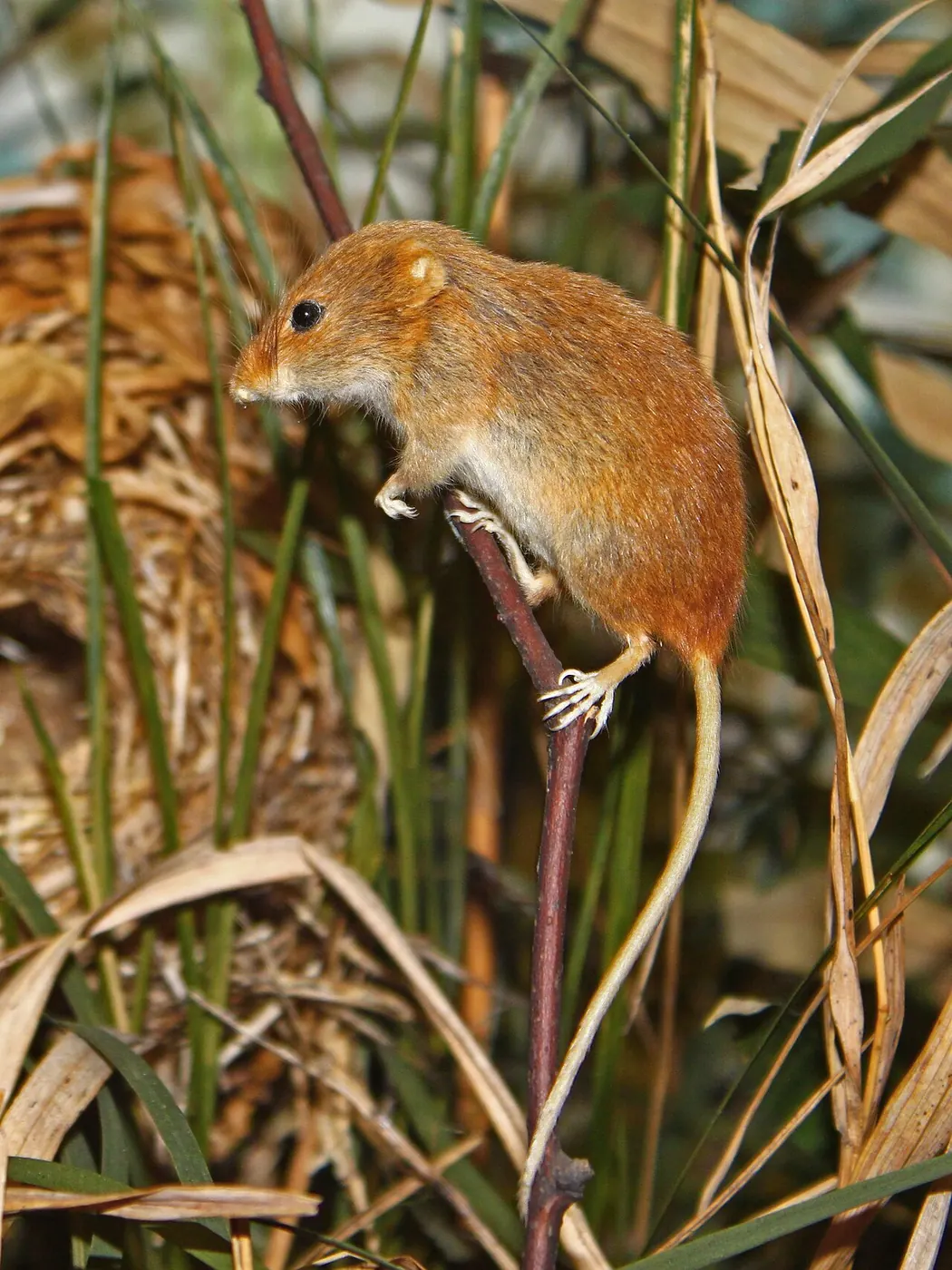
It is the only British mammal with a tail that can grip. It wraps it round grass stems as it climbs.
NestA ball of grass
It weaves a nest the size of a tennis ball out of living grass leaves, well above the ground.
ClimbingLife in the stalks
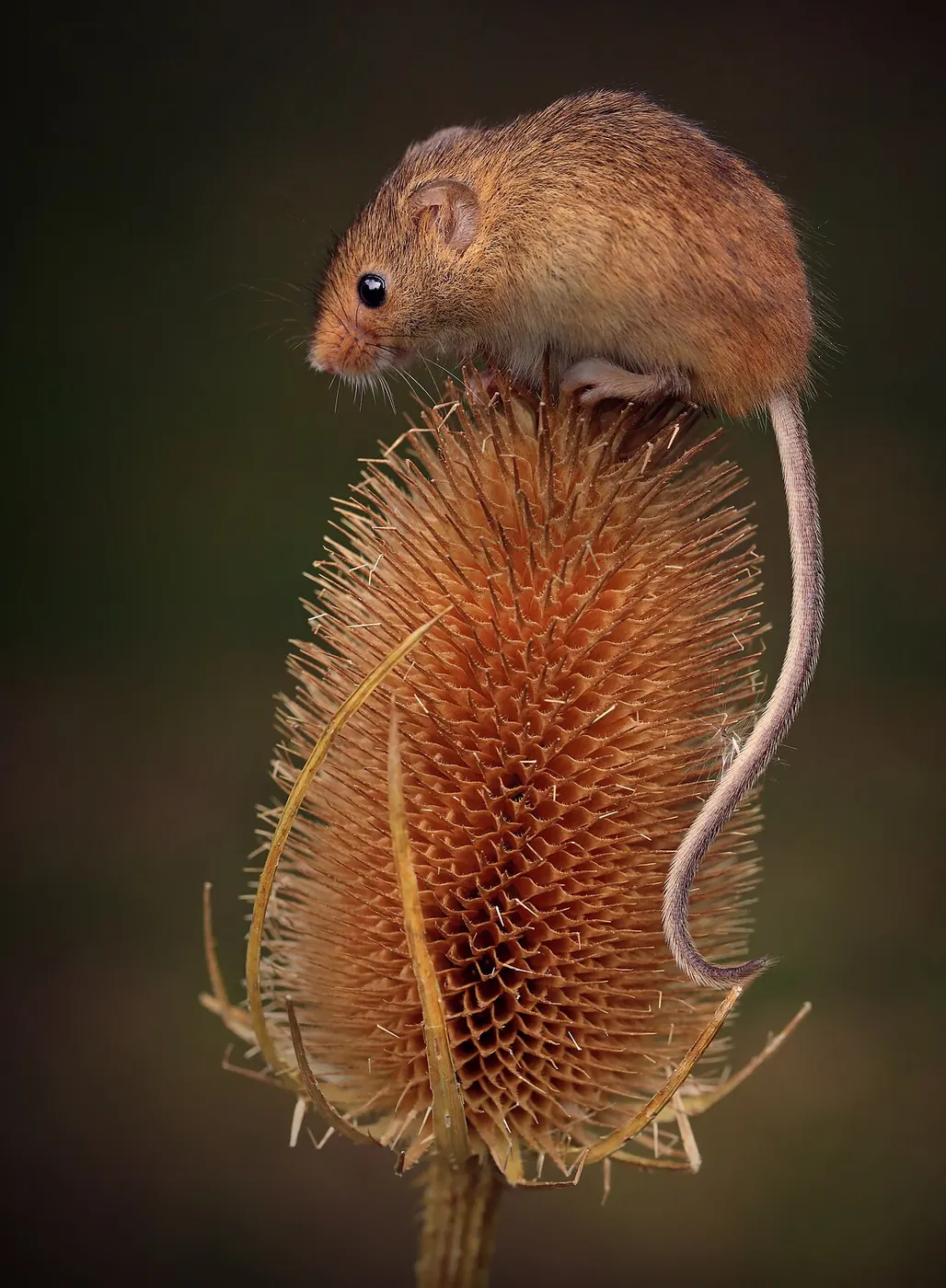
A harvest mouse spends much of the summer climbing among grass stems rather than on the ground.
WinterDown for the winter
In winter it moves down to ground level and into hedge bottoms, grass tussocks and barns.
SignsLook for the nests
The mice are very hard to spot. Finding their old nests in winter is the usual way to know they are there.
The real thing
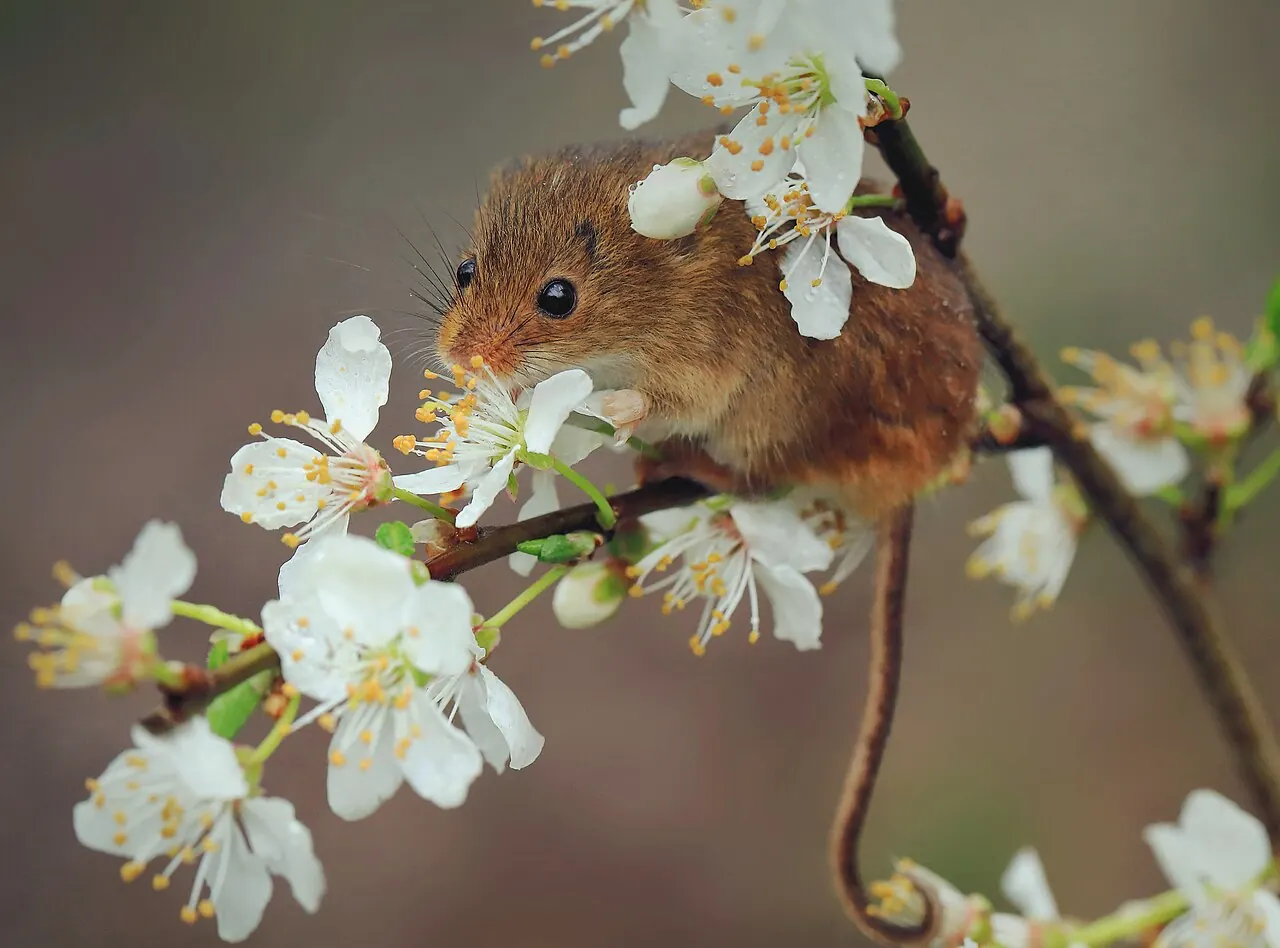
Photos of the harvest mouse
Out and aboutHow to spot one
The mice are very hard to see. In winter, search tall grass, reeds and bramble edges for a woven ball of grass about the size of a tennis ball.
Lend a handHow to help
Leave field edges, ditches and reed beds uncut, and cut hedges only every two or three years.
Following youLadybird
Who should follow you?
Bees and hoverflies
Butterflies and moths
Dragonflies and damselflies
Beetles, hoppers and ants
Not insects at all
Snails and spiders aren't insects: a snail is a mollusc, and spiders have eight legs.
Garden birds
Pond animals live on the Pond page: choosing one takes you there.
Pond life
Night garden
Seashore animals live on the Seashore page: choosing one takes you there.
Rock pool life
Woodland animals
Under a log
Meadow life
River animals live on the River page: choosing one takes you there.
River life