Among the biggest ants
At up to two and a half centimetres, it is one of the largest ants in the world.
The backyard · Bees, wasps and ants
Myrmecia
A very large, red-brown and black ant with long straight jaws and big eyes.
Marches after you, jaws open. Move your pointer and see.
Good to know
At up to two and a half centimetres, it is one of the largest ants in the world.
Unlike most ants it has excellent eyesight, and will turn to follow you from a metre away.
It grips with its jaws, then curls its body round and stings from the tail. It hurts a great deal.
Bull ants are much like the earliest ants, and are found only in Australia.
Workers go out singly, without scent trails, and find their way home by sight.
The smaller kinds, called jack jumpers, leap several centimetres at a time.
The real thing
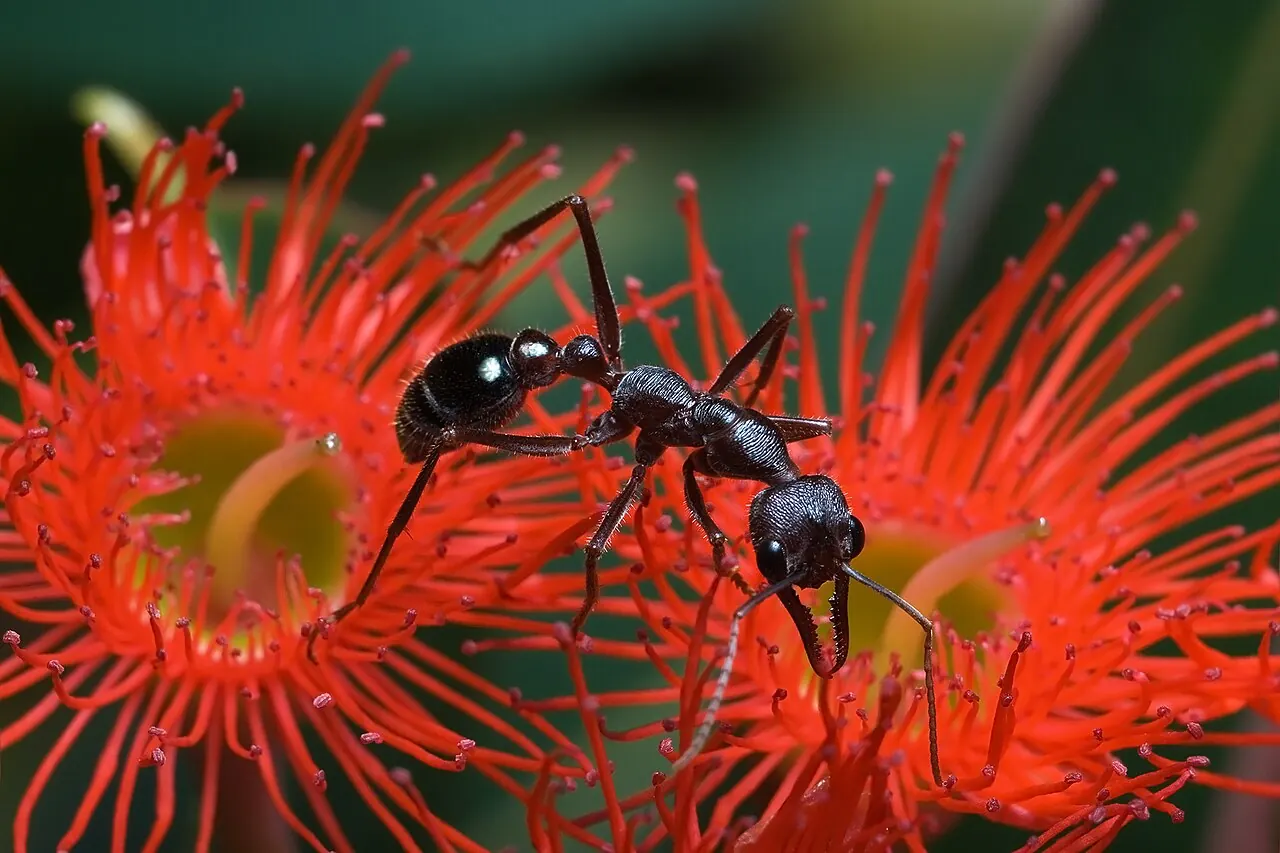
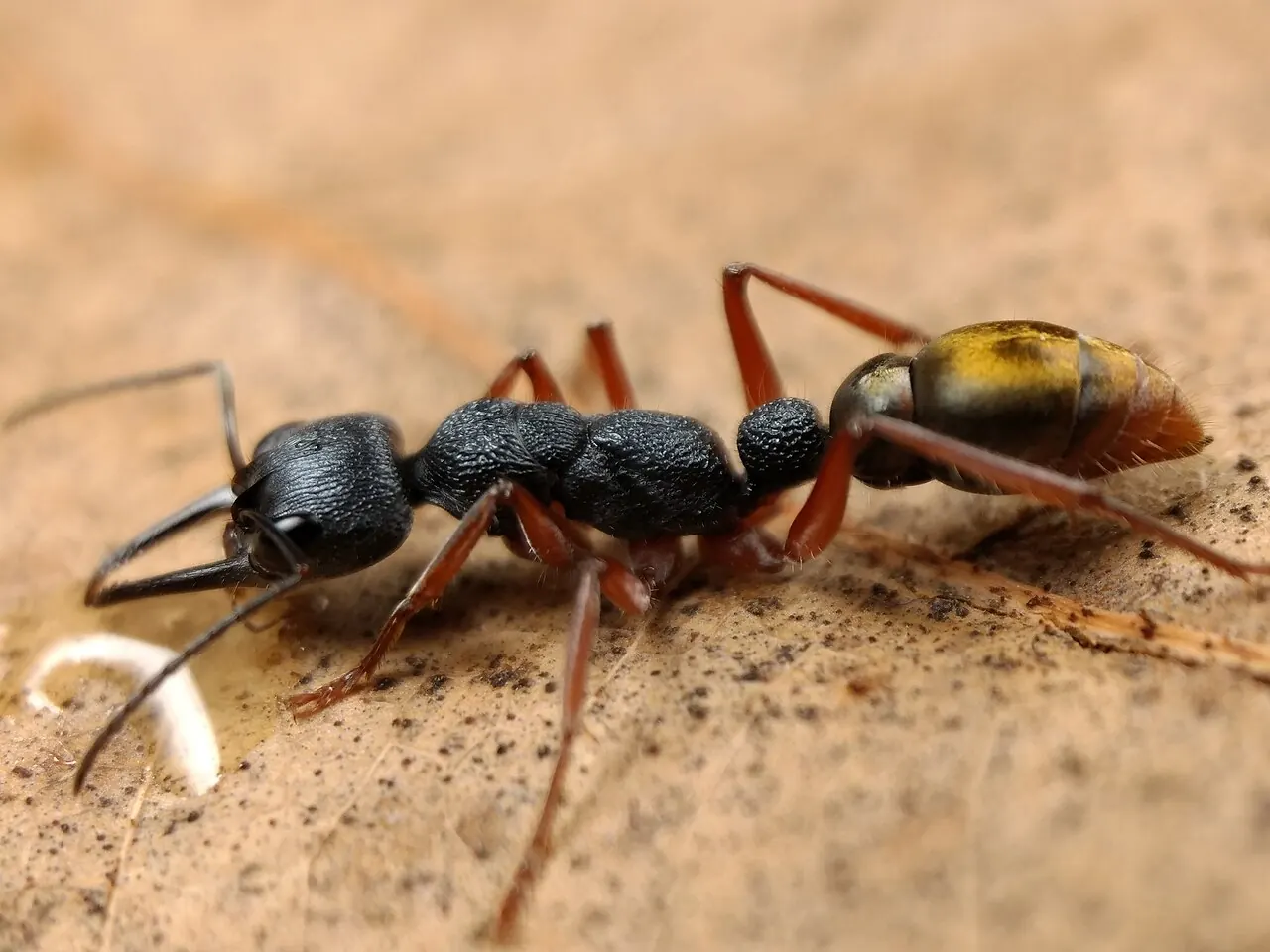
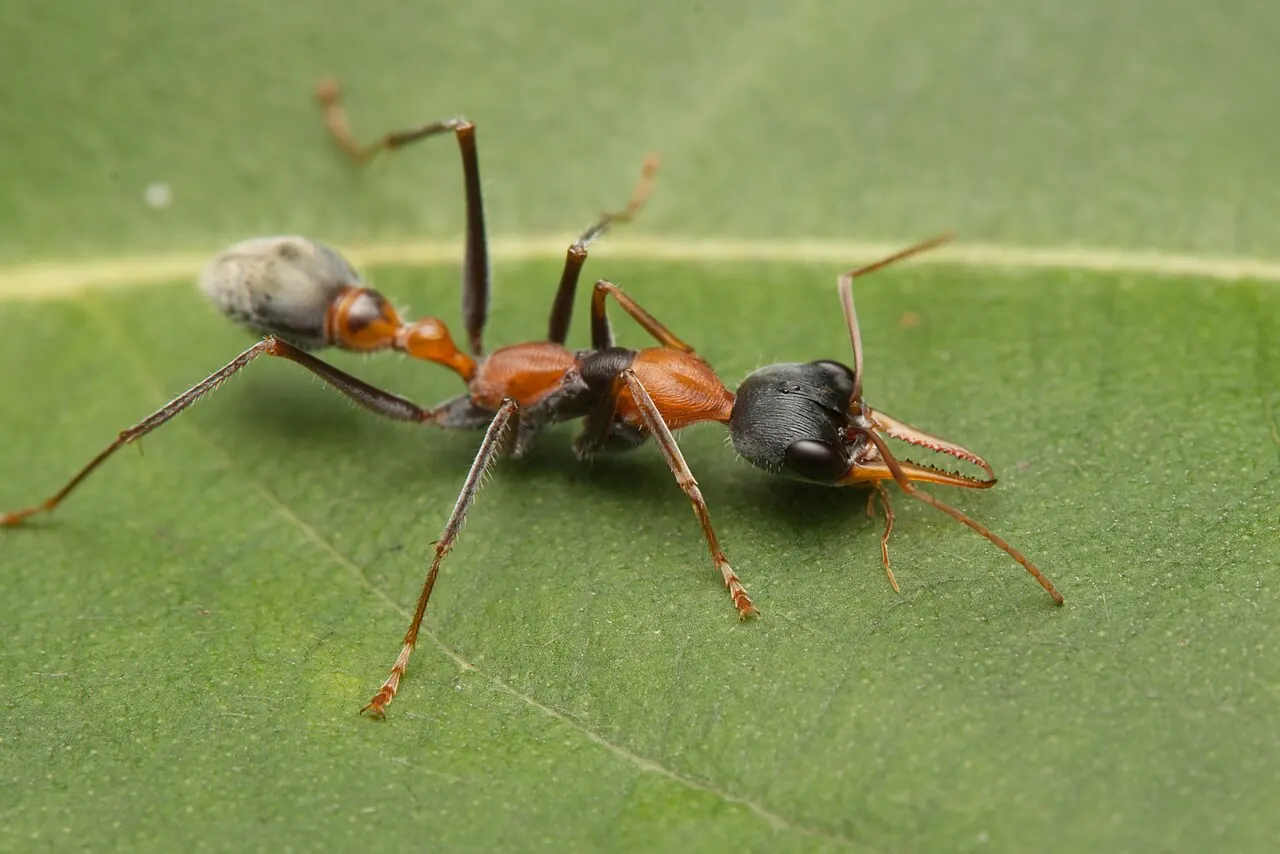
Photos are from Wikimedia Commons, used under the free licences shown. They have been resized, and cropped where they appear in link previews.
Look for a low mound of earth and gravel with a hole in the top, and big ants standing guard. Watch from a few steps back.
Bull ants defend their nest, so do not stand on it. Away from the nest they are busy hunting and will ignore you.
Keep going
Bugs from other parts of the world live on their own pages: choose another.


