They sew with their babies
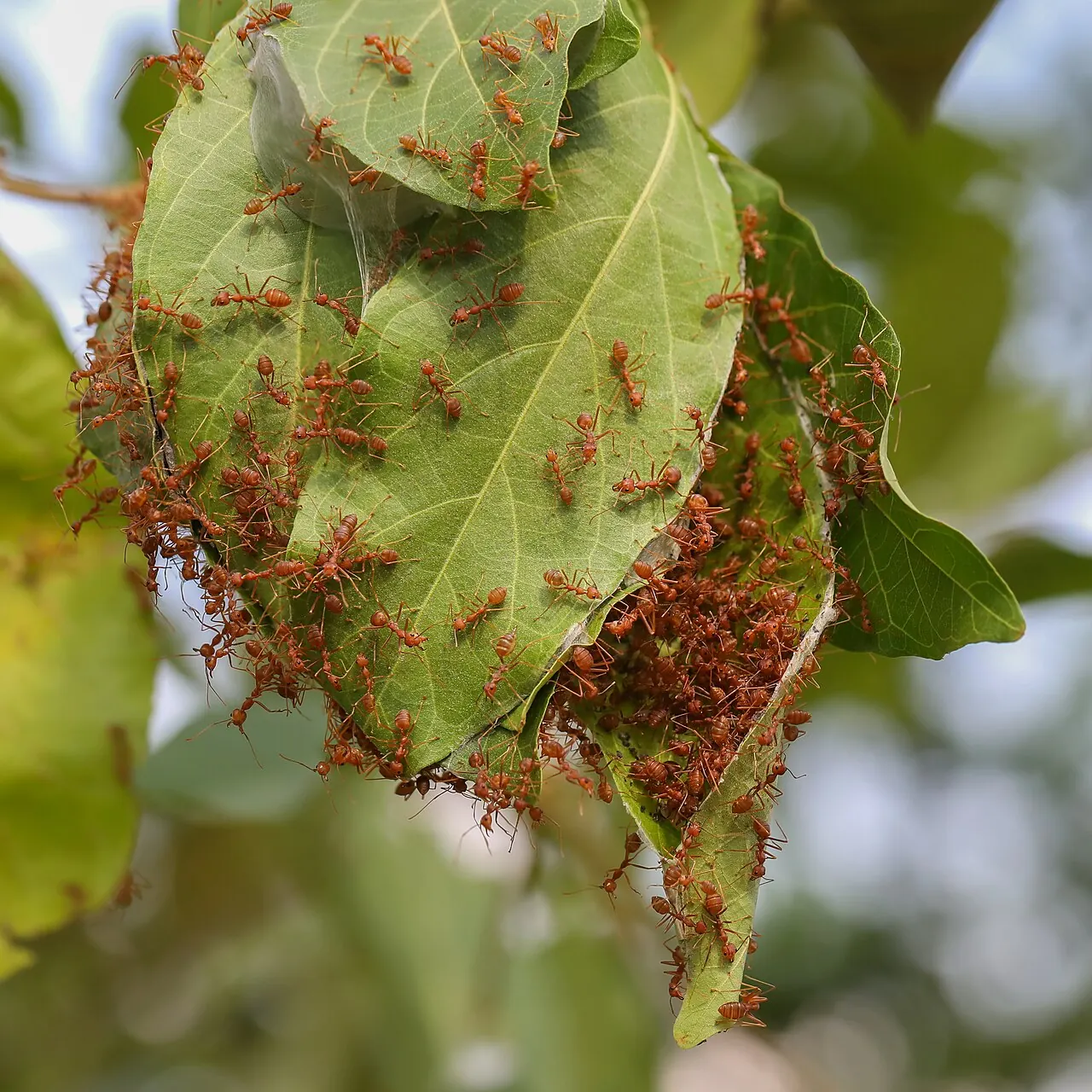
The grubs make silk. Workers hold a grub in their jaws and pass it back and forth like a tube of glue to join the leaves.
The Borneo rainforest · Bees, wasps and ants
Oecophylla smaragdina
Long-legged, orange-red ants that live in trees, in nests made of living leaves sewn together.
March after you in a line. Move your pointer and see.
Good to know
The grubs make silk. Workers hold a grub in their jaws and pass it back and forth like a tube of glue to join the leaves.
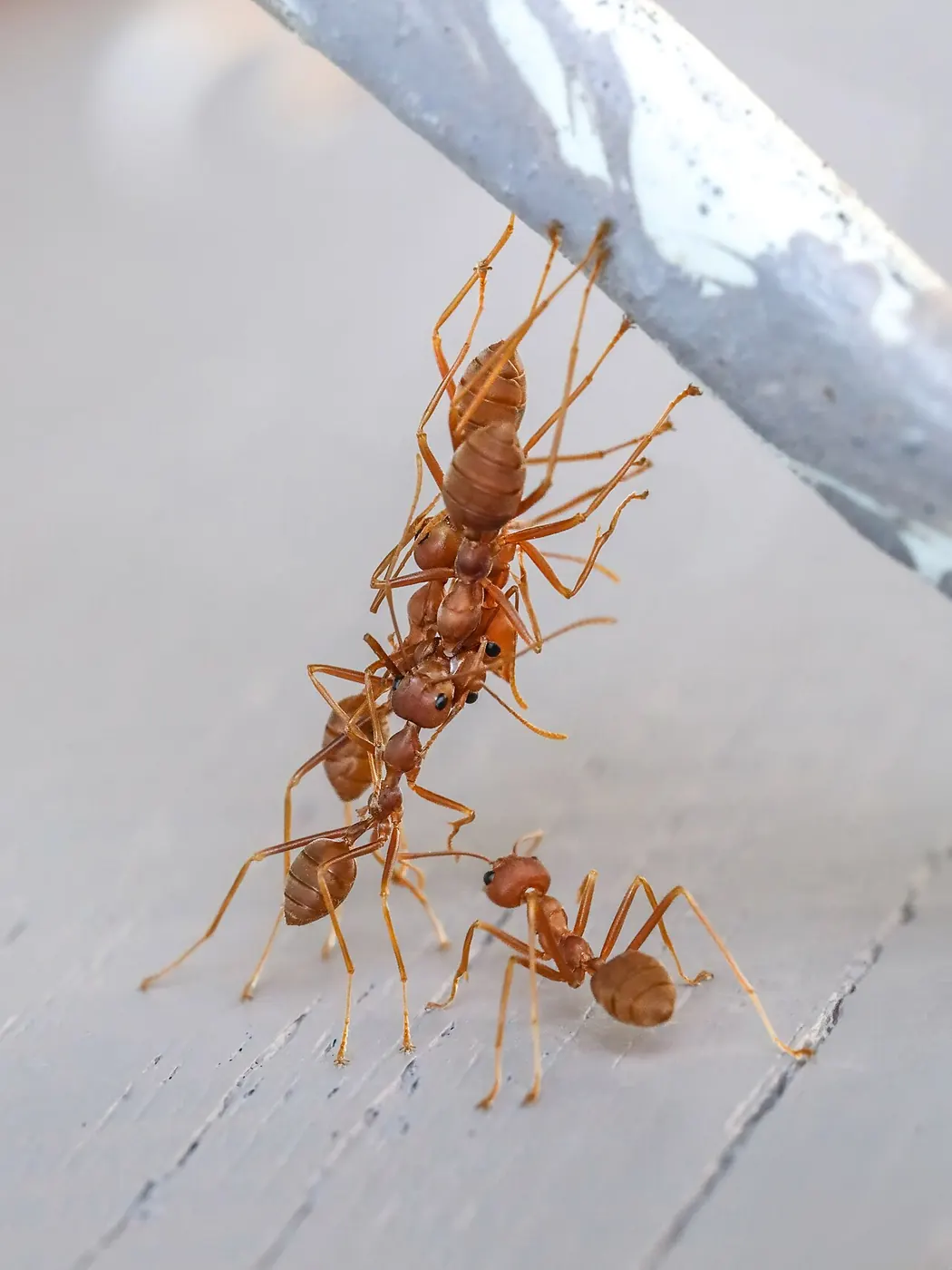
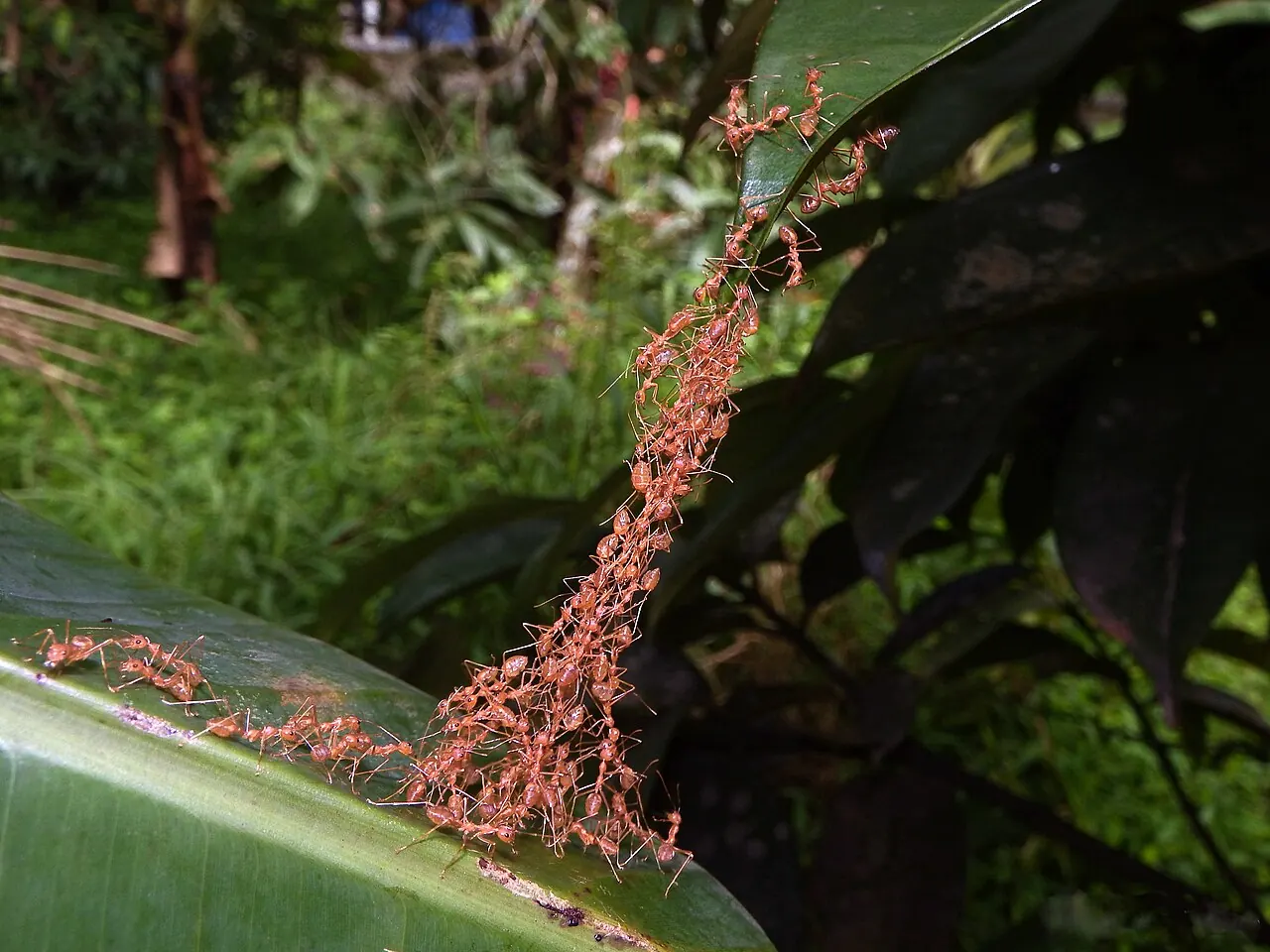
To pull two leaves together, the ants grip each other waist to jaw and form chains across the gap.
A single colony can have more than a hundred nests spread over several trees, and half a million ants.
Chinese orange growers were using weaver ants to protect their fruit about 1,700 years ago.
They bite, then squirt acid into the wound. It stings, but does no lasting harm.
The ants and their grubs are eaten in Thailand and elsewhere. They taste sharp and lemony.
The real thing
Photos are from Wikimedia Commons, used under the free licences shown. They have been resized, and cropped where they appear in link previews.
Look up into mango, citrus and other broad-leaved trees for balls of leaves bound with white silk, and ants running along the branches.
They are a gardener's friend: a tree with weaver ants has far fewer pests. Just do not lean on it.
Keep going
‹ Atlas beetleBack to The Borneo rainforestA to ZJewel beetle ›
Bugs from other parts of the world live on their own pages: choose another.

.jpg)
