Skip to the content
Meadow and hedgerow · Butterflies and moths
Meadow brown
Maniola jurtina
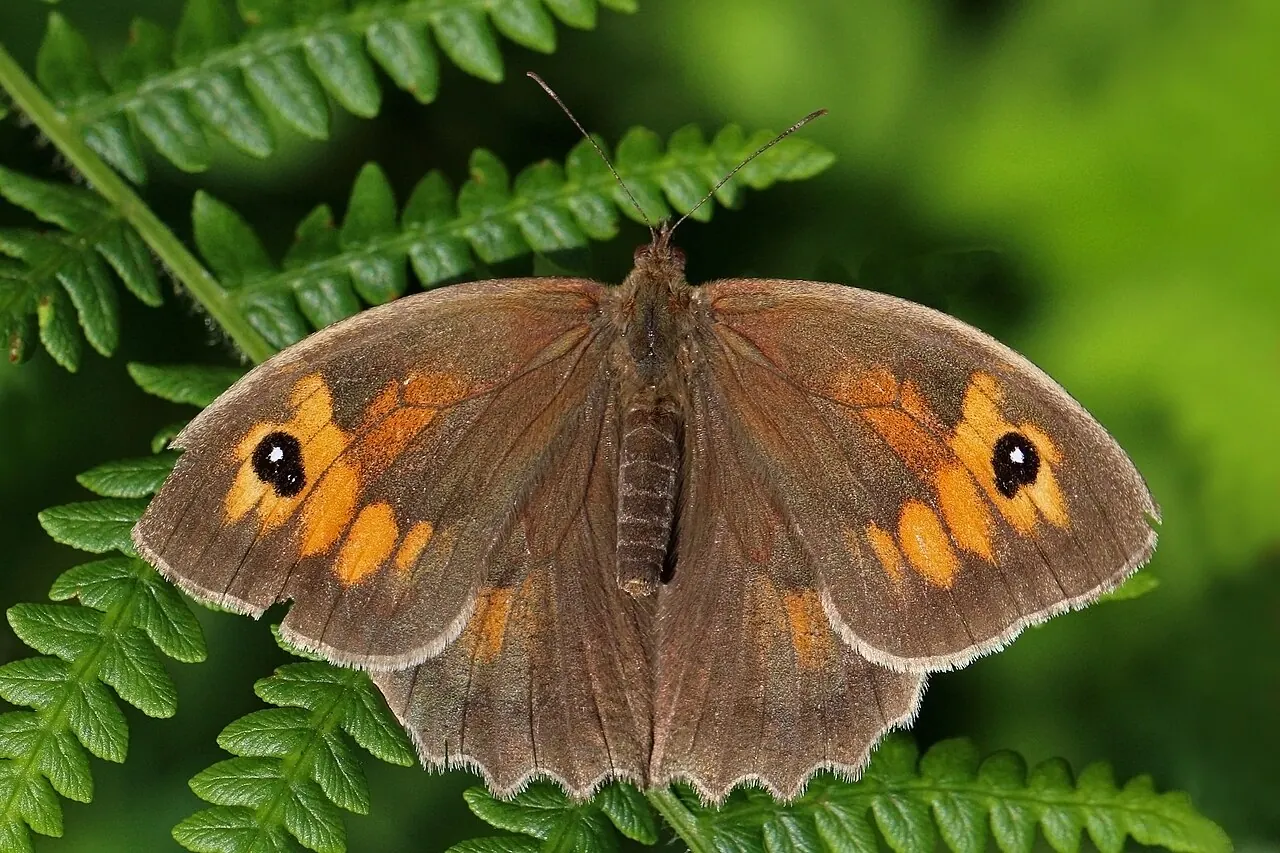
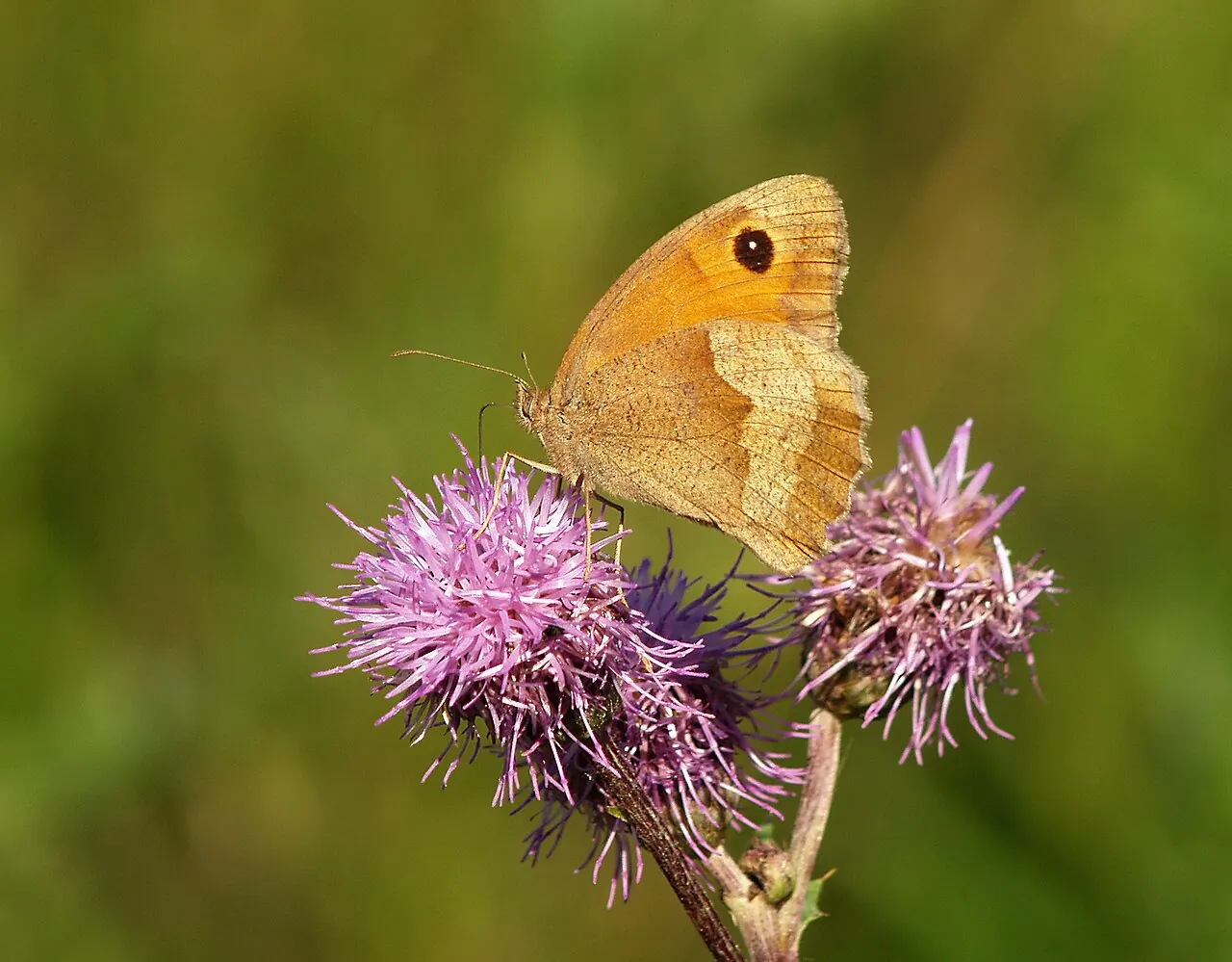
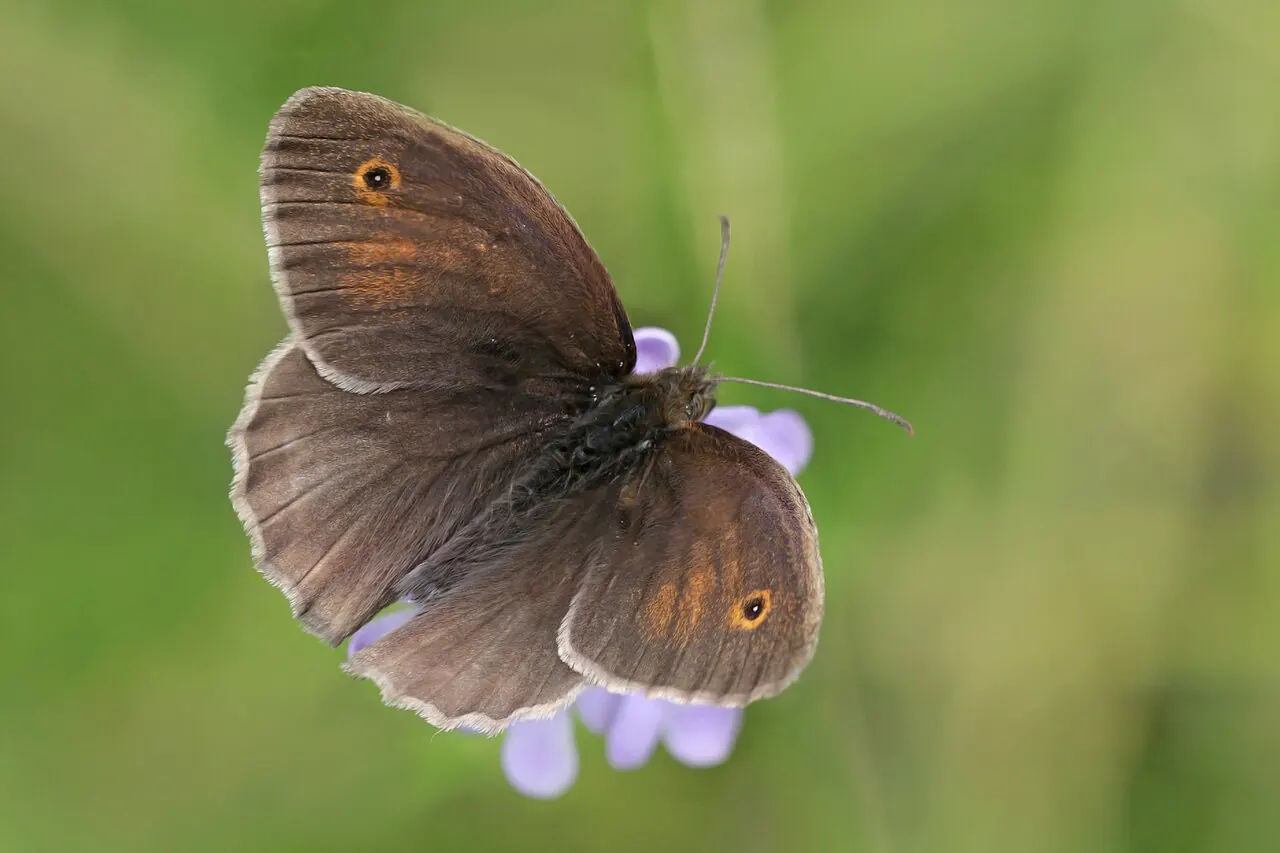
A plain brown butterfly with one black eye-spot, ringed in orange, near the tip of each forewing.
- Size
- Wingspan about 5cm
- Look for it
- June to September
- Where
- Grassland of every kind: meadows, verges, parks and downs
My spotter's list
Bobs after you, low over the grass. Move your pointer and see.
When to look
JFMAMJJASOND
Meadow brown
Good to know
Six things about the meadow brown
CommonThe commonest of all
In a good meadow there can be thousands. It is probably Britain's most numerous butterfly.
DullOut on dull days
Unlike most butterflies, it will fly in cloudy weather and even in light rain.
SpotA decoy eye
The eye-spot draws a bird's peck to the wing tip, away from the body. Many have a beak-shaped nick there.
GirlsFemales are brighter
The female has a large orange patch on each forewing. The male is darker and plainer.
YoungA caterpillar of the night
The green caterpillar feeds on grasses after dark and takes most of a year to grow.
StayA stay-at-home
Most meadow browns live their whole lives within a few hundred metres of where they hatched.
The real thing
Photos of the meadow brown
Photos are from Wikimedia Commons, used under the free licences shown. They have been resized, and cropped where they appear in link previews.
![]()
Out and aboutHow to spot one
Walk through any long grass in July and they rise ahead of you. Bramble flowers and knapweed are favourite stops.
Lend a handHow to help
They need grass that is left long. Even a strip along a fence is enough to hold a colony.
Following youLadybird
Who should follow you?
The garden
Meadow and hedgerow
Pond and stream bugs live on their own page: choosing one takes you there.
Pond and stream
The log pile
After dark
Bugs from other parts of the world live on their own pages: choose another.
_female.jpg)

_male.jpg)