Two different animals
Alone, a locust is shy, green or brown, and avoids others. Crowded together, it changes colour and behaviour and joins a swarm.
The savanna · Grasshoppers, crickets, mantises and stick insects
Schistocerca gregaria
A large, yellow and sandy-brown grasshopper with speckled wings.
Springs after you in long hops. Move your pointer and see.
Good to know
Alone, a locust is shy, green or brown, and avoids others. Crowded together, it changes colour and behaviour and joins a swarm.
The change is set off by other locusts brushing against its back legs.
A big swarm can cover hundreds of square kilometres and hold tens of billions of insects.
Each locust eats about its own weight in plants a day. A swarm can strip a field in minutes.
Swarms fly with the wind and can cover more than a hundred kilometres in a day.
Locust swarms are recorded in ancient Egyptian tombs and in the Bible.
The real thing
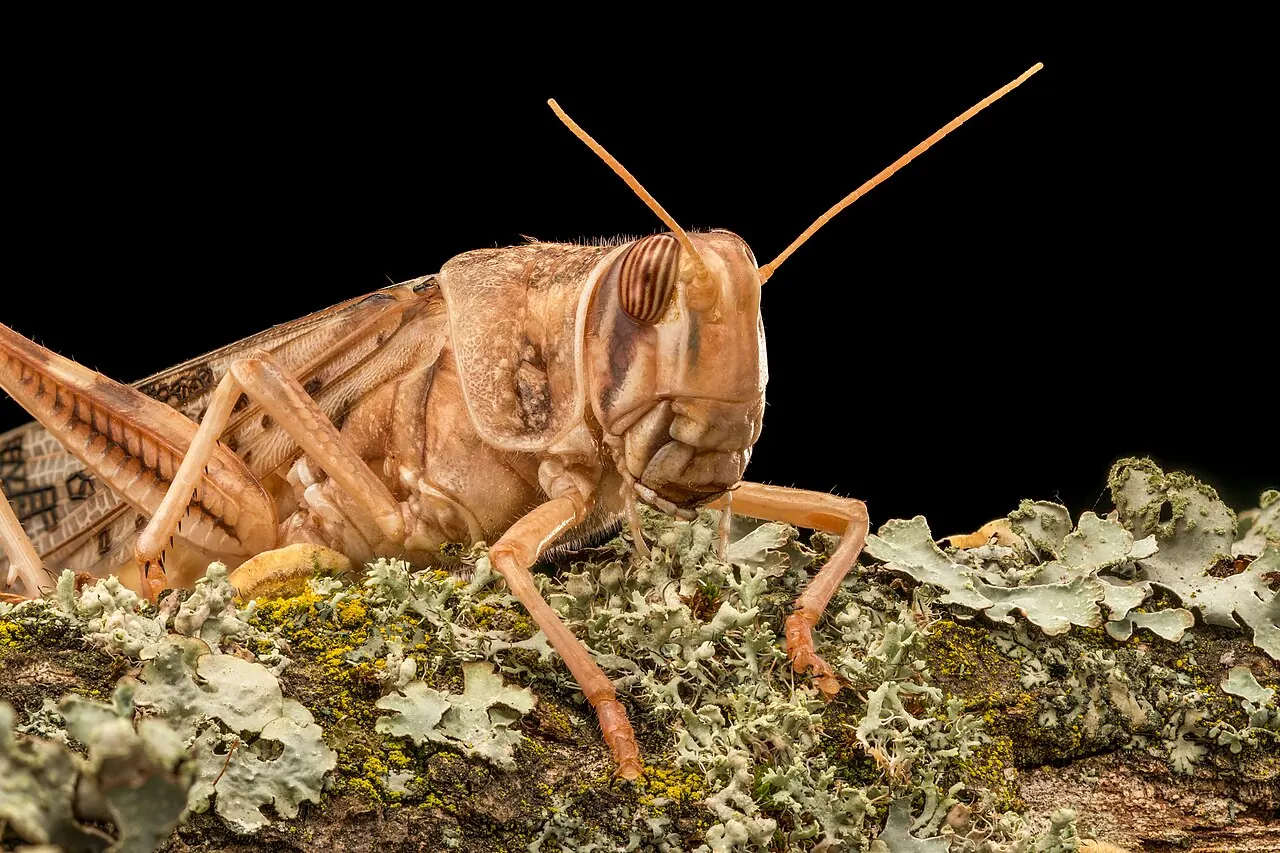
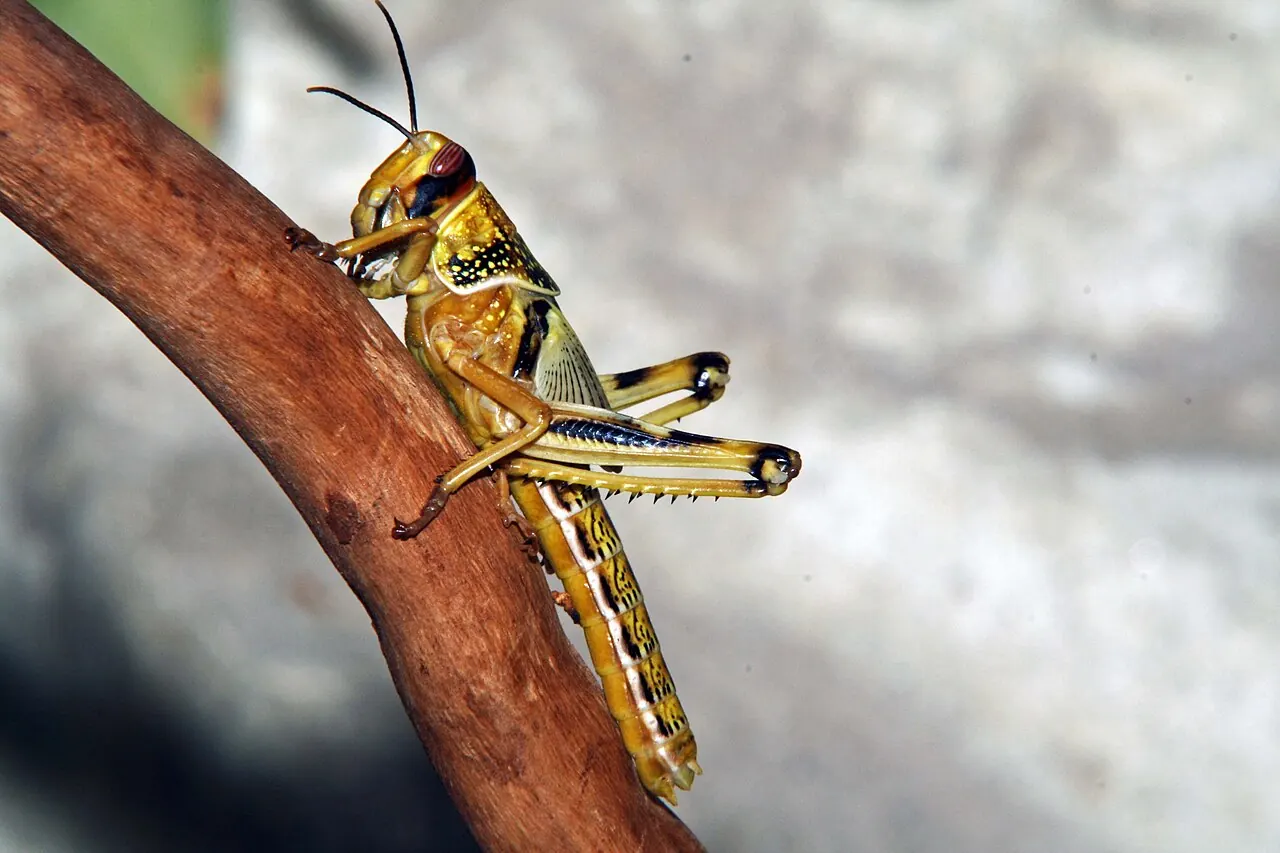
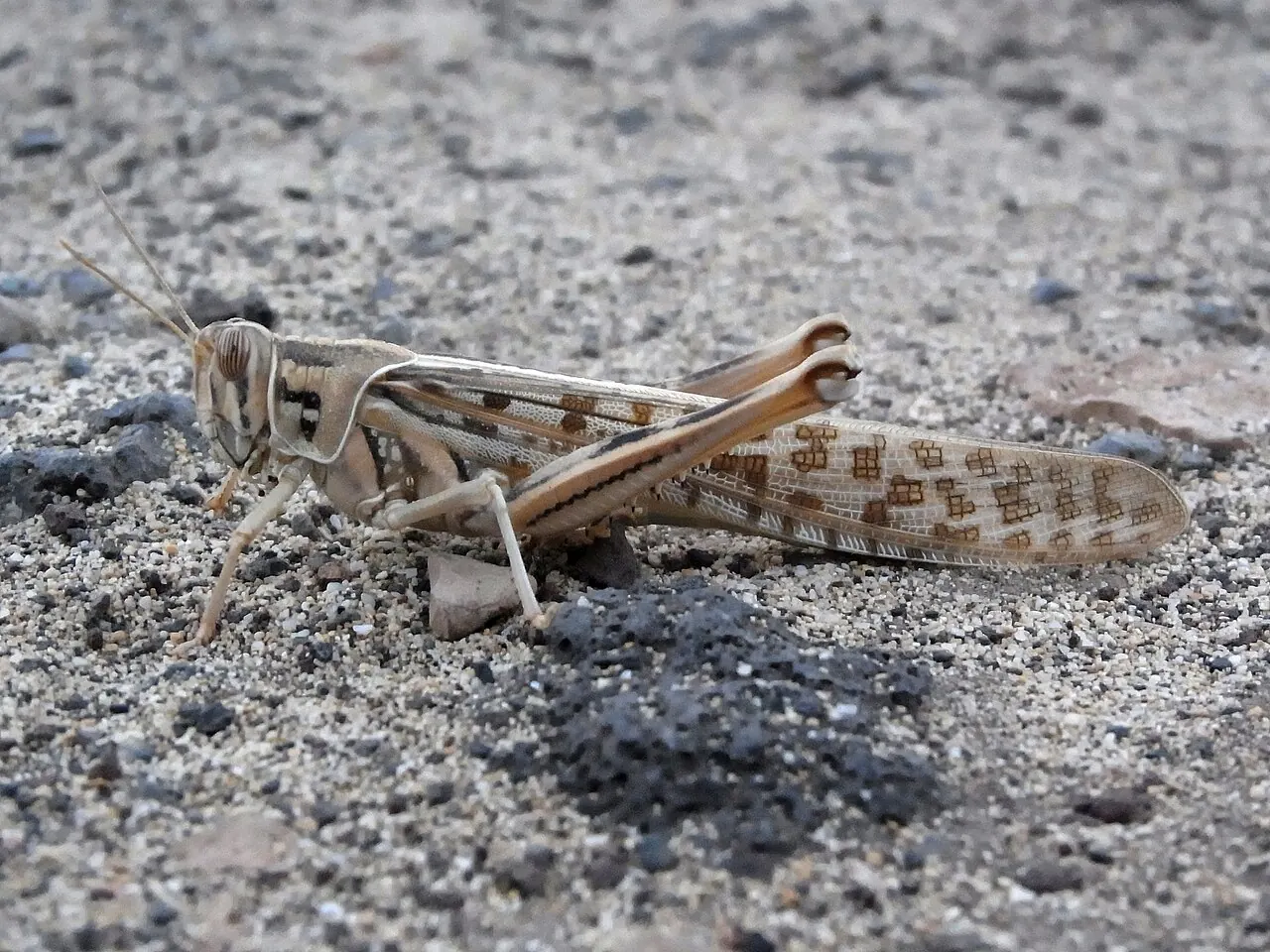
Photos are from Wikimedia Commons, used under the free licences shown. They have been resized, and cropped where they appear in link previews.
Solitary locusts are hard to find: look for a large grasshopper flying a long way when disturbed. Swarms are impossible to miss.
Countries across Africa and Asia share warnings of where swarms are forming, so that they can be dealt with before they grow.
Keep going
Bugs from other parts of the world live on their own pages: choose another.


